

Glen Hansard and the Beautiful Madness of Fitzcarraldo
Everyone Is Dragging Something Up a Mountain

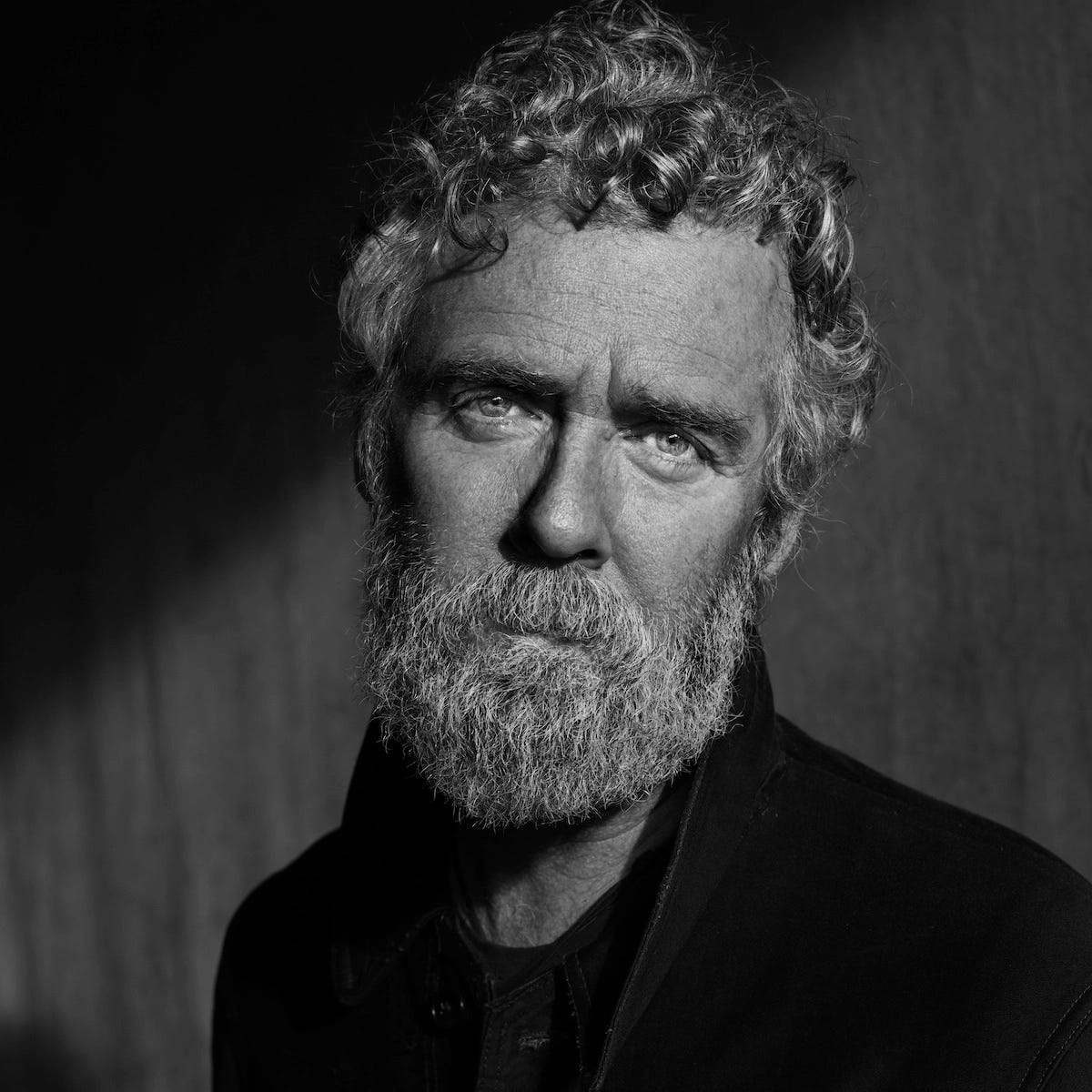
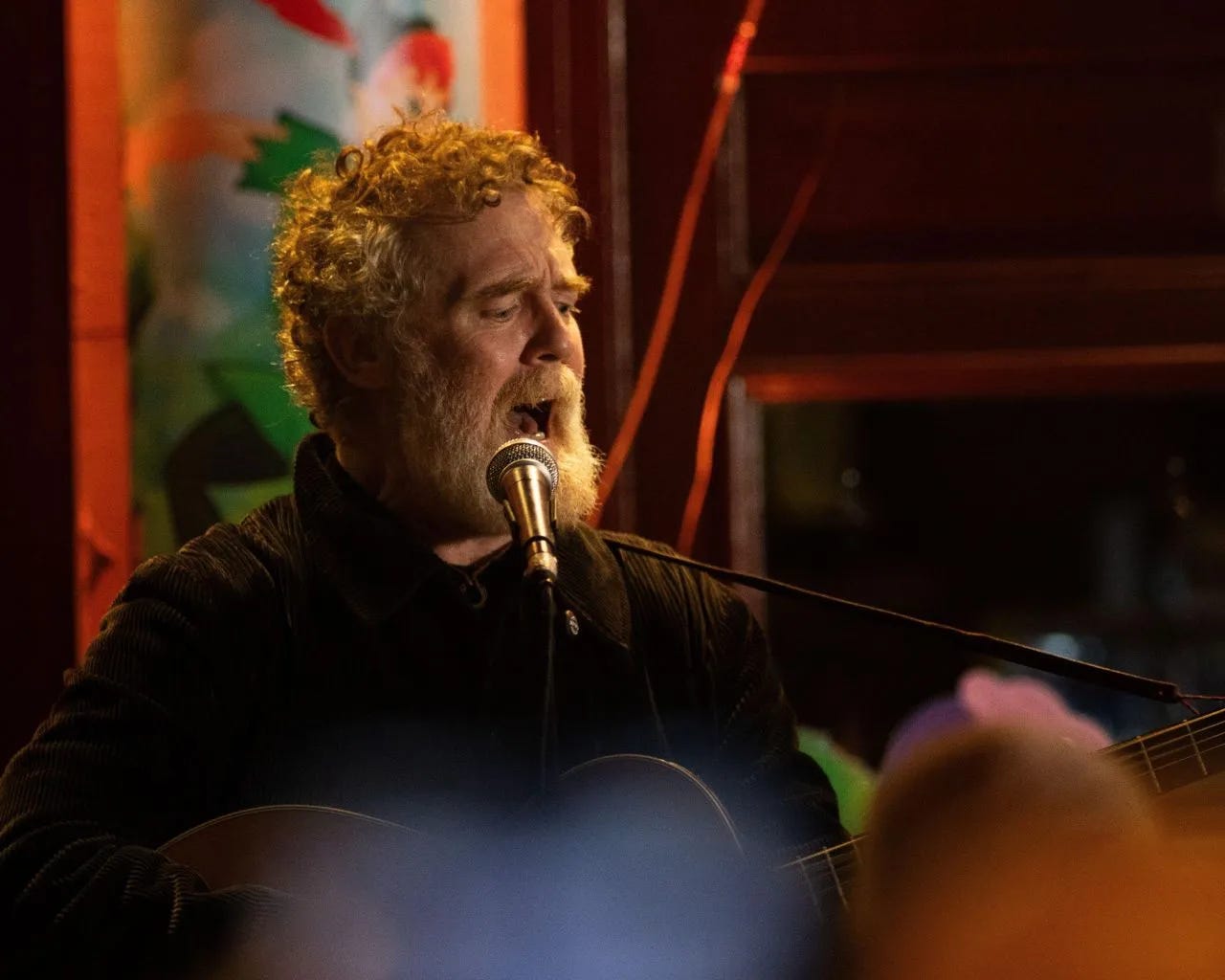
My wife told me on a Tuesday that Glen Hansard was dead.
It happened July 29. Motorbike accident on a Dublin road in the early hours of the morning.
I stopped what I was working on… and for a few moments... I wept.
Glen Hansard wasn’t a celebrity to me. He was an artist. A man whose music and presence left a mark on my soul.
I started listening to him when I was a young adult. I even got to see him once, in Oklahoma City of all places. I remember being struck by how humble he was.
So genuine. So warm. Despite his immense gifts.
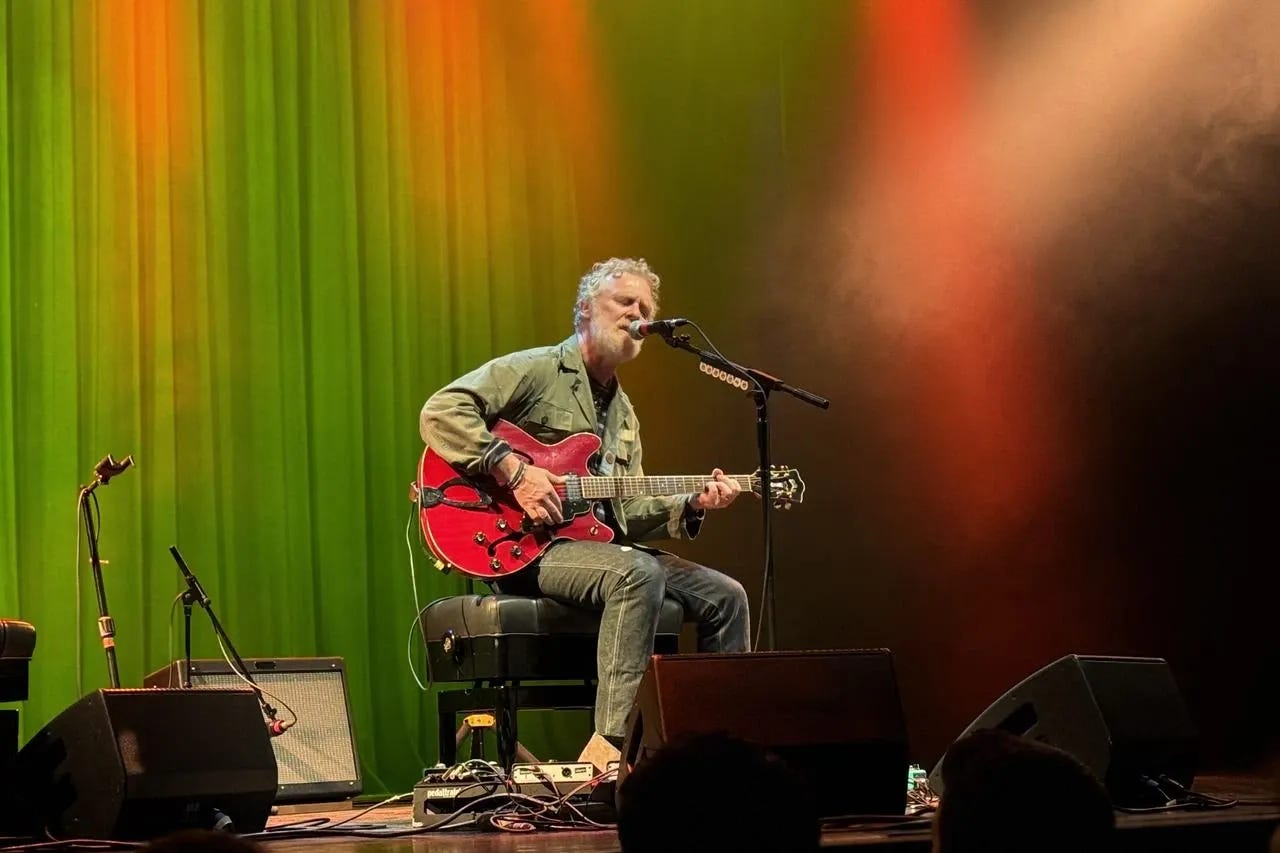
At one point between songs, he stopped and said some very kind things about Oklahoma.
My wife and I looked at each other. We’d been to Dublin… We knew what he was comparing us to, which made his comments all the more endearing. He wasn’t pandering. He was just being Glen.
Hansard’s music had been a part of the soundtrack to our lives. Over the following days, we started re-listening to his catalogue… The Frames, The Swell Season, his solo career…
We watched parts of his funeral together and cried.
Throughout the week, my mind kept coming back to one song:
Fitzcarraldo.
My favorite song by Hansard.
I first heard it somewhere around 2007. It immediately captured something in me. I didn’t know what it was about… but it spoke to me in ways I couldn’t quite explain at the time.
As the years went by, I kept wandering back to Fitzcarraldo… and slowly started to peel back the layers of the song’s meaning.
In one live performance in 2003, Glen opens the song by saying:
“This song was written after seeing a film called Fitzcarraldo, which was directed by a German director, Werner Herzog. It’s about a man pulling a ship over a mountain.
And I just thought it was a lovely idea, so I wrote a song about it. ’Cause I think a lot of us are pulling stuff over mountains.”
That’s the human condition.
Pulling stuff up mountains.
Hansard has a lot to say for those who struggle.
But the film is where the meaning of the song lives.
Once you see it, you will never hear this song OR Glen the same way again.
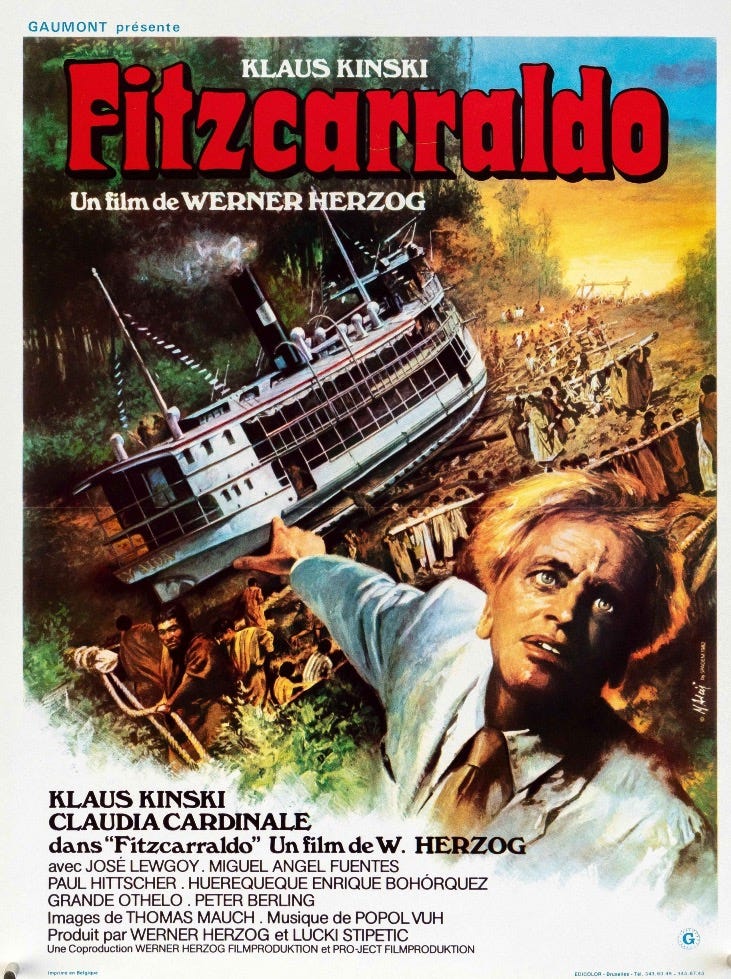
The story behind the film is utterly unhinged in the best way.
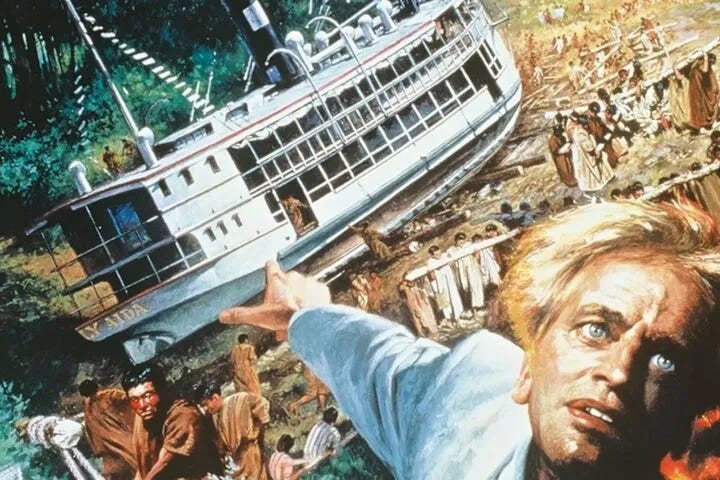
Based on a real historical story about a half Irish half Peruvian rubber baron named Carlos Fitzcarrald.
Herzog transforms the legend into an Irishman, Brian Sweeney Fitzgerald, nicknamed ‘Fitzcarraldo’ by the jungle people who couldn’t quite wrap their tongues around his real name.
So in the film this Irishman (played by Klaus Kinski, a German who hilariously refused to do an Irish accent) living in Peru goes to the opera house... and is absolutely captivated. Hooked.
Moved emotionally, spiritually, and eventually, physically, by what he sees.
He walks out saying:
“I have got to share this with the world.”
And for… reasons… the place he decides to bring opera is not Ireland.
No.
He wants to bring it to the middle of the Peruvian jungle.
He becomes so consumed by this dream that he devises a bizarre scheme.
He procures a 320-ton boat, sails it upriver, and enlists a group of villagers to drag that boat over a mountain in hopes to stuff it full of rubber and sail it back home to sell it on the free market.
If God smiles and the river cooperates, he thinks this will fund his impossible dream.
I’m not a musician. I wanted to be one, once.
I became a preacher, which I’ve always treated as less of a profession and more of a craft. Communicating beauty, hope, and truth in a way that is both plain, yet transcendent.
Part of the method I was trained in is something called expository preaching. Going through a text, line by line, asking: what does it mean? What is the meta-narrative, what does it demand of us, what did it cost the writer, and what was burning inside the author when he wrote it?
I want to, as best I can, honor Glen by attempting to do just that with this song.
Fair warning: I am ABSOLUTELY going to get things wrong.
This is an exercise in interpretation of art. I never got to sit across from Glen at a coffee shop and ask him what any of this meant.
So I did the next best thing. I read everything I could find. Watched the Herzog film. Watched Glen perform this song across dozens of live performances. Dove headfirst into the strange and beautiful history of how this song came to exist.
Werner Herzog heard a true story and made a film.
Glen saw that film and wrote a song.
I heard that song... and then I heard that Glen died.
And I’ve been trying to find meaning in those two things ever since.
This is my attempt to share what I’ve found.
Here’s what I’m going to do: work through this song line by line, start to finish. Every lyric. In order. Trying to answer one question… what did Glen mean, and what might it mean for us?
As Glen once sang,
Scratching at the surface now.
I’m trying hard to work it out.
“Here, back, down a long and straight track”
It’s fascinating how often we mishear lyrics.
So much has gone misunderstood.
I always thought he said strange track.
He says straight. Think about that.
A straight track is MORE horrifying than a winding one... Because the winding of the road hides what’s coming next.
When you’re staring down the barrel of a straight track, it shows you the whole distance. Every single solitary mile. Nothing left to obscurity.
Anyone who has anxiety driving knows it hits the hardest when you’re rolling down a long, straight road where the horizon starts to blur toward the end. No variety. No distracting scenery.
Just... the road.
To walk that kind of road takes courage.
To see exactly what you’ve signed up for, how hard it is, and keep walking anyway.
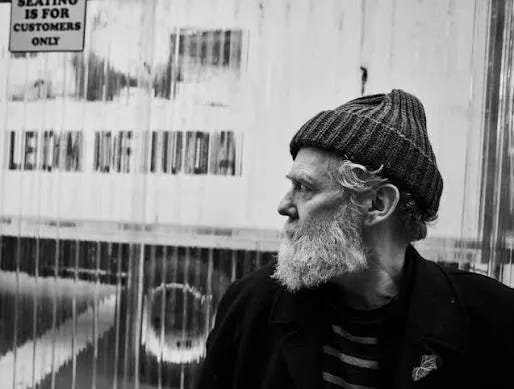
“I have chose the long road that leads me out to God knows”
In Irish English vernacular, “God knows” means I have ABSOLUTELY NO FLIPPIN’ idea.
Isn’t that the core message of walking by faith?
It’s Abraham, following the call of Yahweh away from the gods of his fathers, the sky-deities of Ur, and into the covenant of the true God.
It’s Christ in the garden saying, “Father, if there be any other path... please show me the way.”
“Not my will, but yours be done.”
It’s Glen in a guitar shop singing:
“This mystery only leads to doubt.
And I didn’t understand.
When you reached down to take my hand….”
The road goes somewhere.
And that somewhere is in the hands of God, not us.
I think of what the long road must have meant to Glen.
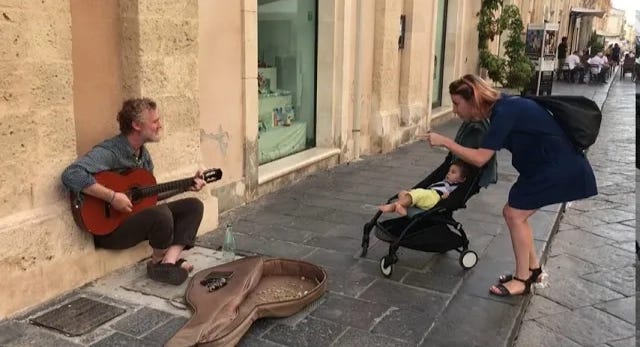
A man who left school at the age of thirteen to hit the streets and start busking. A man who fought to stay authentic to himself. To the art. To the music. To the streets. To Dublin.
Resisting the pull of the industry to sell out and become something he wasn’t.
But now, we return to Fitzcarraldo.
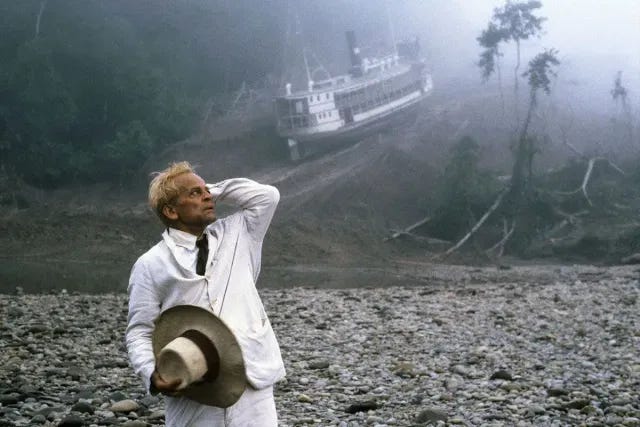
“…So I can’t stop right now.”
Not won’t.
CAN’T.
For Glen. For Herzog. For Fitzgerald. The option of stopping is completely gone. So much momentum has built up that stopping is... utterly impossible.
This makes me think of my dearest friend from childhood.
A musician. A true artist. A guy I believe could fill stadiums on the sheer power of his voice, craft, and songwriting alone, but like thousands of other insanely talented artists who the industry has not waved their magic wand over… spends much of his time playing bars and smaller venues.
Places much smaller than the depth he contains.
And yet he still chases the dream, because he is obsessed with making people happy through song.
I remember sitting out on the curb outside our favorite sandwich shop. Me eating a smoked Gouda chicken sandwich. Him eating... I don’t know what.
I remember him telling me that he was finally launching his music career. The dream we’d talked about constantly all through middle school and high school.
He was going for it. I was so excited for him.
I’ve watched him chase that dream for almost a decade now at great personal cost to himself. It’s been a long hard road.
He sent me a recent song demo, entitled “If It Kills Me.”
The song is about never giving up on your dream.
Even if it leads to your end.
So Fitzcarraldo.
I think about my own life.
My dreams to be a missionary in Ireland... and God rerouting me to Oklahoma.
Leaving a community and ministry world I loved in CA and moving to the midwest.
Eight years in a land full of red dirt and hard soil… trying to build something that matters.
Eight years of having multiple organizations say “we love you! Come work for us!” only to pull the rug out because the money wasn’t there, the leadership changed, or someone made a promise they didn’t actually have the power to keep.
Eight years of following a simple dream: keep teaching people the Way.
Fulfilling a promise I made before I left California to my former students… and to myself: “Even if I can no longer get paid to do this, I’m going to keep doing it. Because I believe it is worth it.”
Living as a bi-vocational itinerant minister. Preaching in coffee shops and small youth group rooms. Longing for brotherhood but serving in isolation.
Writing for strangers on the internet.
Building a school of discipleship for young adults, trying to spread the teachings of Jesus.
I think about a phone call with a mentor where I told him the struggle.
His response was: “Maybe you should just quit. Maybe it’s time to pack it up.”
But I can’t.
I keep saying, “Lord, you have the words of life. Where else would I go?”
I have chose the long road that leads me out to God knows.
So I can’t stop right now.
It’s a kind of holy madness at times. To keep fighting for what you believe in.
Other stories flood my mind.
I think about the wonderful band of friends, pastors, and creatives I served alongside as we tried to build a nonprofit that served thousands of people around the globe.
When money got tight and it seemed like the ship was sinking, our boss was determined not to force us to go down with it. He told us, “You’re free to quit. You can go find other jobs. No one is stopping you.”
But, being a bunch of faith-filled dreamers, we all said:
“No. We’re going to stay. We’ve chosen this long road. We don’t know where it leads. But we want to fight to keep this thing alive.”
For us, the road led to layoffs.
But it was the road we chose.
I think about my own father.
Planting a church in Oregon in the 90s. Coming from the hustle and bustle of California ministry success and excitement into a bleary and bleak Oregon landscape full of heavy rain, self doubt, and spiritual darkness.
I think about how at times he was so discouraged and worn-down that he had to grip the steering wheel with both hands just to keep driving.
The way the enemy whispered “Just end it. Crash the car. What reason do you even have for living?”
I think about how he fought through the whispers… how he didn’t give up.
And how his legacy, a life of resiliently following his calling, often has inspired me to keep going. To keep dragging that ship up the mountain.
Because we both believe in building beautiful things… even when it doesn’t make sense.
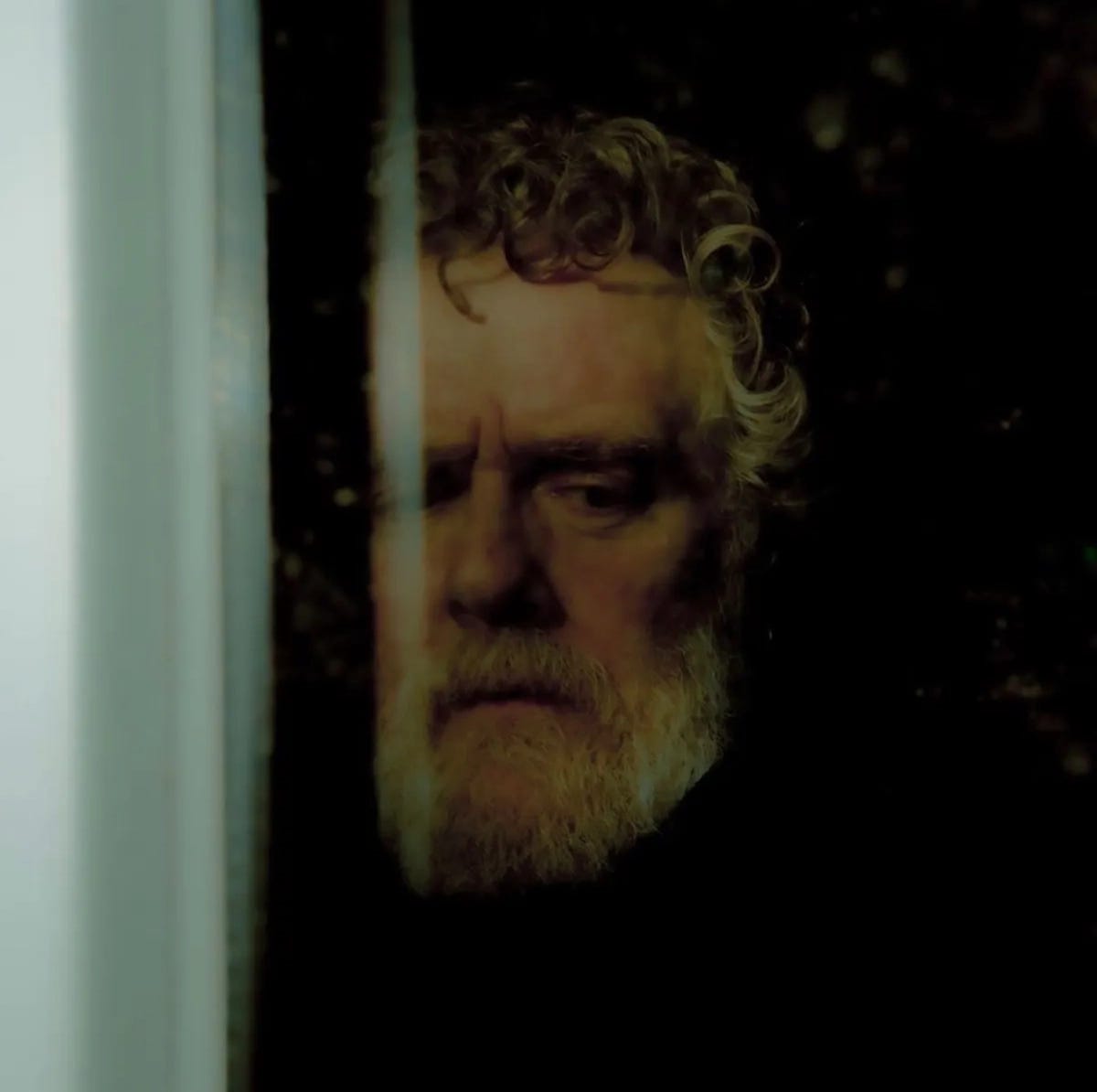
“Even the good stars
can fall from grace and falter.
Lose their faith and slide.”
Every long road has casualties. I’m not speaking of merely those who quit or perish… but those who stayed and got warped by the thorns in the soil.
Fall from grace. That’s theological language.
Good stars. Luminous, guiding stars.
Lights in the night sky that you navigate by.
The kind of stars that once led the wise men to Bethlehem.
I wonder if Glen is talking about specific musicians he watched get destroyed? Good people wrecked by the ego that comes with success, or addictions to substances that numb artistic angst… or perhaps those who got sucked into the machine and shredded by the industry until they come out the other side without any artistic integrity left.
A shadow of their former self.
For me, I think about the painful losses along the way.
Every pastor I know has so many stories of the bright stars that fell.
The men and women we used to navigate our lives by. The ones who shone so brightly for the gospel.
And yet we find out later that they gave in to their own primal desires... or perhaps that their character was always broken from the start, and it was all a lie. A charade.
My greatest pain in the Christian life has not come from non-Christians or the secular world.
It has come from being hurt by other Christians.
By being let down. Again and again.
I wonder if Glen is talking to himself here.
I wonder if he knows, at 25, that he is a good star in this moment. Bright and full of integrity.
I believe that Glen, for his part, did not fall.
Whatever the industry tried to take from him, Glen seems to have shaken it off and come out the other side still dragging the ship.
Consider the contrast.
Fitzgerald in the film is so consumed by his mission that men die in pursuit of his dream.
Herzog was so obsessed with telling that story that the production nearly consumed his entire crew.
But when you hear Glen’s bandmates talk about him... his friends... even his exes... they don’t describe a man trying to burn down the world to satisfy his ego.
They describe a man with profound humility.
A man broken by the struggles of life, but refusing to stay down.
A man who won an Oscar and returned to the same Dublin streets to busk at 56 years old.
Because he simply loved playing music.
A man known for dragging strangers onto the stage to sing alongside him.
Who showed kindness to anybody.
Who never gave up on people.
Who never gave up on those closest to him.
He took the terrifying fear of falling seriously.
And it held him.
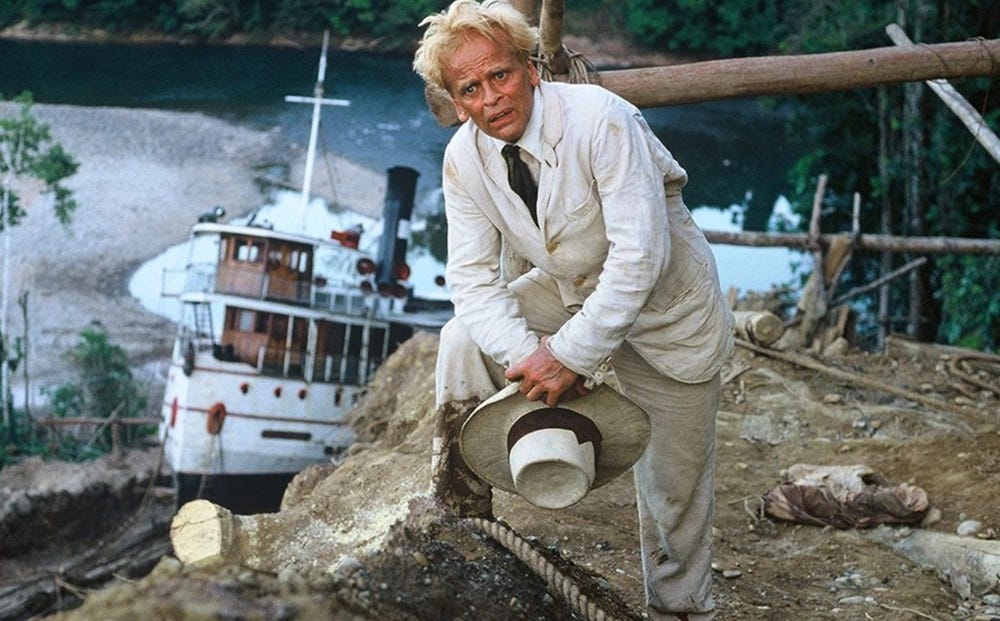
“But I can’t get an ocean
that’s deep enough for my day.”
This is one of the greatest lines I’ve ever encountered in a song.
The feeling of needing a container vast and large and stretching enough to hold the essence of your day. Of your life.
Not a jar. Not a barrel. Not a dam.
The ocean.
And even that’s not big enough.
There is no body of water deep enough to hold what Glen feels he is carrying.
That’s the boat Fitzgerald is dragging up the mountain. No ocean can actually hold it.
I relate to this so much.
The feeling that there is no physical container for what you feel. Your hopes. Your dreams. Your longing. Your angst.
Not even the largest physical thing on the planet is enough.
When I listen to this line, it comes right before the descent into the chorus.
It feels like... sailing toward the edge of a waterfall.
The passion in Glen’s voice, the emotion in the music, sucks you down into the depths of what he’s feeling. We descend with Glen.
Which brings us to the ascension.
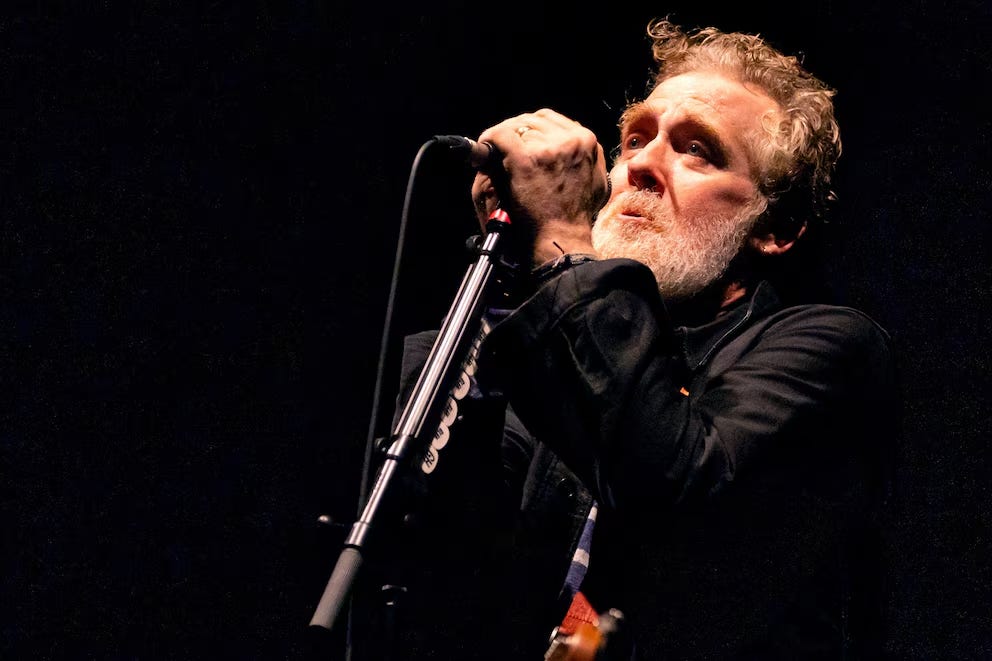
“It’s the first of the Ascension.
It’s a sad way we’ve flown after the storm.”
This must be Ascension Thursday. Glen is no stranger to religion.
He was raised in a traditional Catholic family in Dublin.
He served as an altar boy, in the days before he started developing his own questions and doubts… his own skepticism toward institutional religion.
Before he wandered into other paths, like Hare Krishna, like George Harrison before him.
In this song, Glen returns to the Ascension.
Forty days after Easter. The moment where Jesus literally floats up into heaven.
This triumphant moment for the early church where the King rises into the clouds to go and prepare a place. The promise of the Spirit had been given. The great commission had been assigned.
Now, the ship of the early church is sailing toward the shores of Pentecost.
But Glen seems to call this moment sad.
I wonder why.
It makes me think about how the moment of Jesus ascending was beautiful... but it also must have felt like loss.
The disciples were gaining the Spirit, but they were losing the physical, embodied presence of their master, mentor and friend.
They had survived the storm. The cross. The crucifixion. The resurrection.
And now they have to go on.
They have to keep moving.
There’s a sadness to that.
I don’t think you fully come back from watching your mentor be crucified on a Roman cross.
Even after the resurrection, that moment must have stuck with them. Haunted them.
That reminds me: in my own life, survival and grief can coexist.
Joy and sorrow are not rivals.
I believe that God has built our souls, in this broken version of life, to hold both things together… for Jesus himself was a man of sorrows.
He had more reason than anyone to be hopeful and joyful, because he could see where the ship was actually headed.
Here we come to the great mystery of the song.
“And her last words were: ‘I was only thinking of you.’”
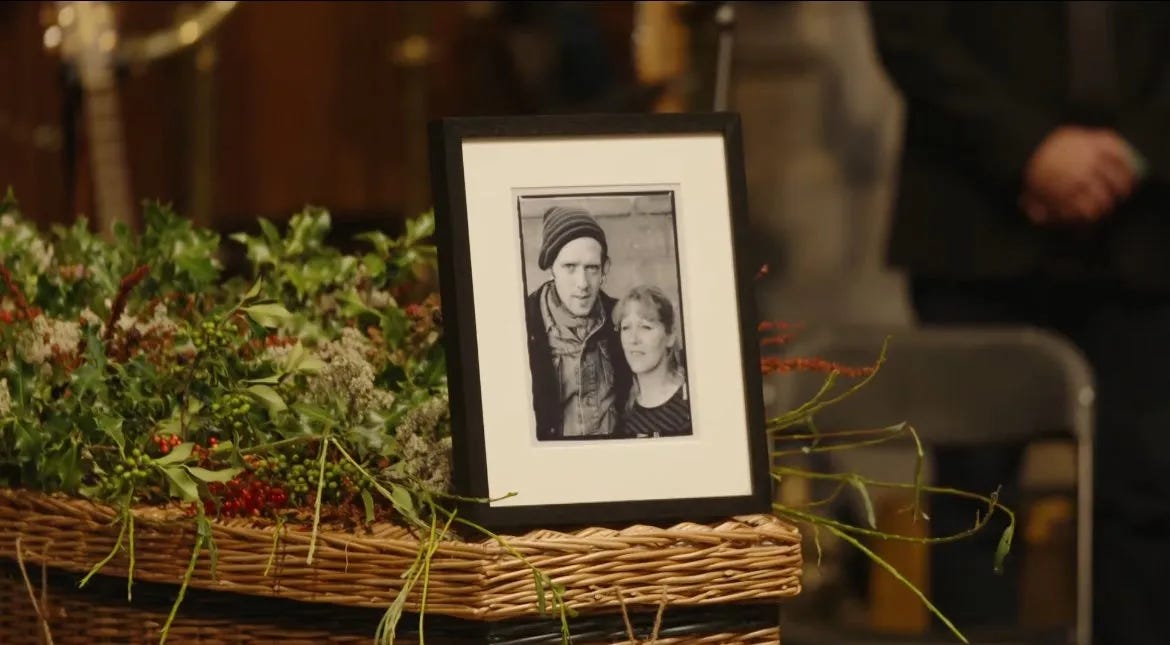
Nobody knows who the woman is.
Glen has never told us.
Some say it might be: A romantic relationship. Perhaps his love affair with music. Perhaps Ireland herself.
I’ve got a theory. But I want to be upfront…this is pure speculation.
I’ve listened to enough Paul McCartney interviews to know that sometimes an artist puts a lyric in not because it means anything, but because it sounds nice.
“Yesterday” began as “Scrambled Eggs.”
But here’s my best guess on who the woman is for Glen.
His mother was named Catherine.
She sold fruit on Moore Street in Dublin. She used to bathe her kids in the kitchen sink while listening to Simon and Garfunkel and Leonard Cohen records.
She was described as the bright, shining star. The warm center of the family... while Glen’s father was the silent, emotionally unavailable one.
Glen called her his brightest spirit.
Sadly, she died of a heart attack inside a nursing home during Ireland’s first COVID lockdown in 2020. Glen wasn’t even there. Tragically, he was in France when he got the phone call.
The way he described losing his mother breaks my heart every time I read it.
“It’s a powerful thing, to lose your mother. I’m stating the obvious, but it’s the biggest. That’s the place you came from, literally. That’s your first home, and it’s gone.”
But wait... no… hold on.
This doesn’t work.
I’m going to debunk my own theory.
He wrote Fitzcarraldo in 1995. His mother died in 2020.
He wrote and performed this song TWENTY-FIVE YEARS before his mother died.
Then he kept singing it afterwards.
All I know is that “I was only thinking of you” is exactly what a mother would say on her deathbed.
In the film, Fitzgerald names the ship the Molly Aida, after the woman he loved and the opera he loved even more.
Maybe “her” is the ship. The dream.
The love of the music… the craft… the process of bringing the thing you love into existence.
It reminds me of the great love that artists and ministers alike hold in their hearts.
The why behind the what as they drag the ship up the mountain.
Why do they do it? Why do they take on low-paying, high-effort work that places them into a life of uncertainty, instability, and struggle?
For love. For the love of family, for the love of people, for the love of God.
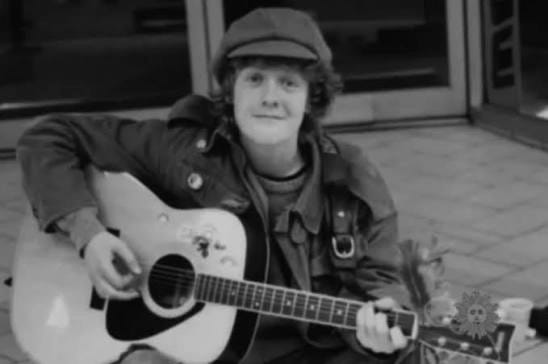
“In my golden days, I was a slave.”
This hits hard.
The golden days are supposed to be the good days... The days when things are successful. When you have support. When things are working.
And yet for Glen, in some of those days, he felt like a slave.
Maybe he felt trapped inside the music industry.
Maybe he could see the machinery starting to overtake him.
I think back to my own days of full-time employment. In many ways, I was a slave to supporting other people’s ambitions. Propping up other people’s dreams.
At times, sacrificing the things God had called me to on the altar of stability, or the promise of belonging.
I think back to other seasons…. Like my present.
No full-time employment. Ministry work and design work that often feel like busking… standing on the corner, hoping someone will choose me.
Waking up every morning and saying, Christ… I don’t know what I’m doing… but I know you know where this road ends. Help me to keep following.
In some ways, even though it’s a struggle... it feels more free.
Interestingly… as time has gone on… the lyrics have morphed.
In live performances, Glen often doesn’t sing “I was a slave.”
He sings “I’ll be your slave.”
Future tense. Directed outward. At someone.
That’s a different lyric.
One is autobiography. The other is a vow.
A vow to who? The audience?
No… I’d wager to the music itself.
No matter how much pain, angst, struggle is faced… despite the lack of an ocean big enough to contain what he carried… Glen sees himself as a bondservant of the music. He can’t quit it.
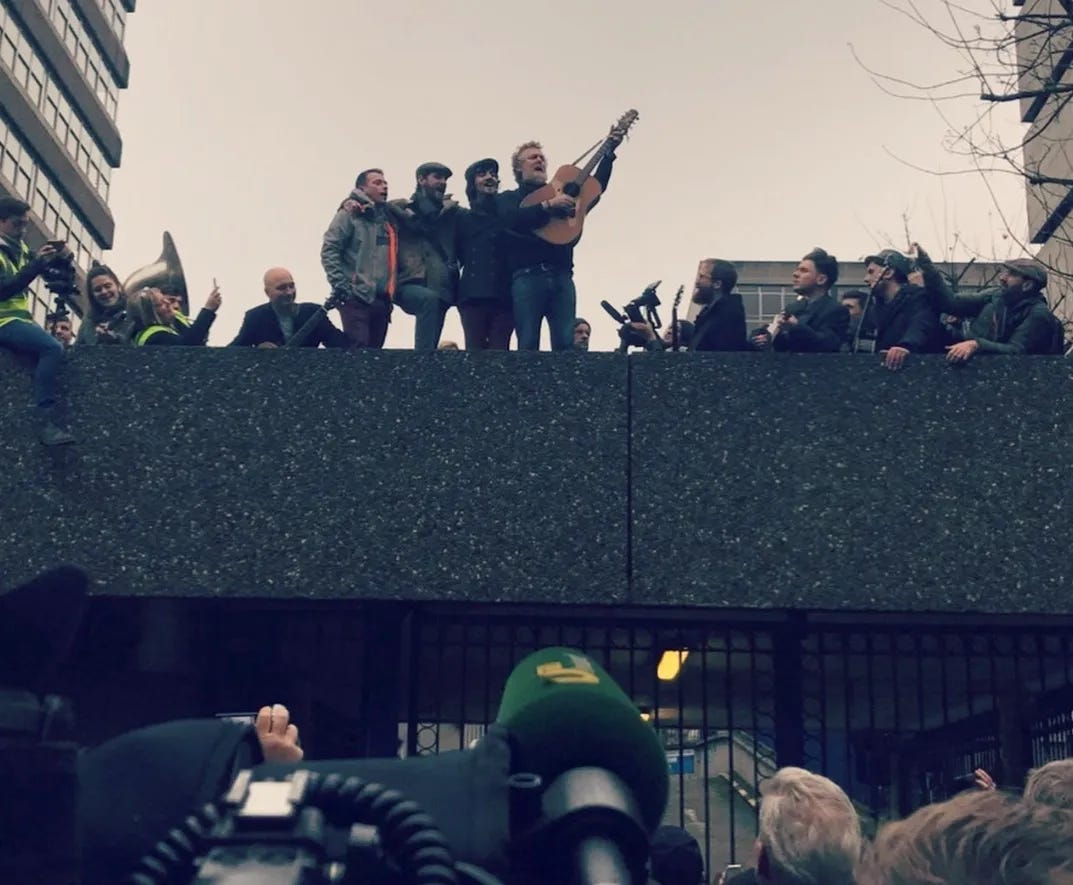
“Now it’s time for to sound your voice
and capture what you’re after.”
This is the shift.
He’s speaking to us. His companions on the journey. The fellow troubadours on the road.
Glen looks at us and says,
“Lift up your voice. Stop being quiet about what you’ve been called to do. Capture what you’re after.”
Yes, you’re exhausted. Yes, the road is EVER long.
But we have to keep singing.
“And if you have something to say…
You’d better say it now.”
Now, Hansard pivots from hope to bitterness in the most dramatic line in the song. This single line contains an entire novel’s worth of pathos.
Let’s descend.
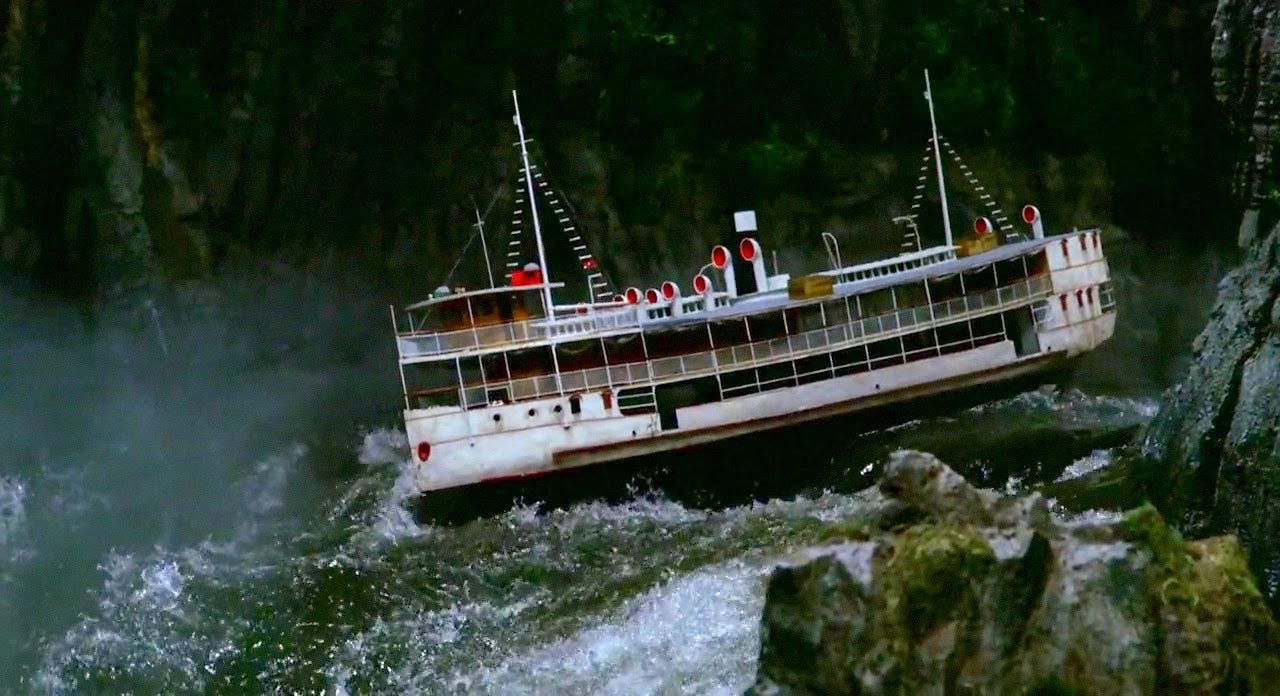
“My ship was sold right up the river…”
Glen sings it with a growl.
You can feel the burn in his vocal.
To understand that line, we have to understand the film.
And we have to understand Glen.
First the movie.
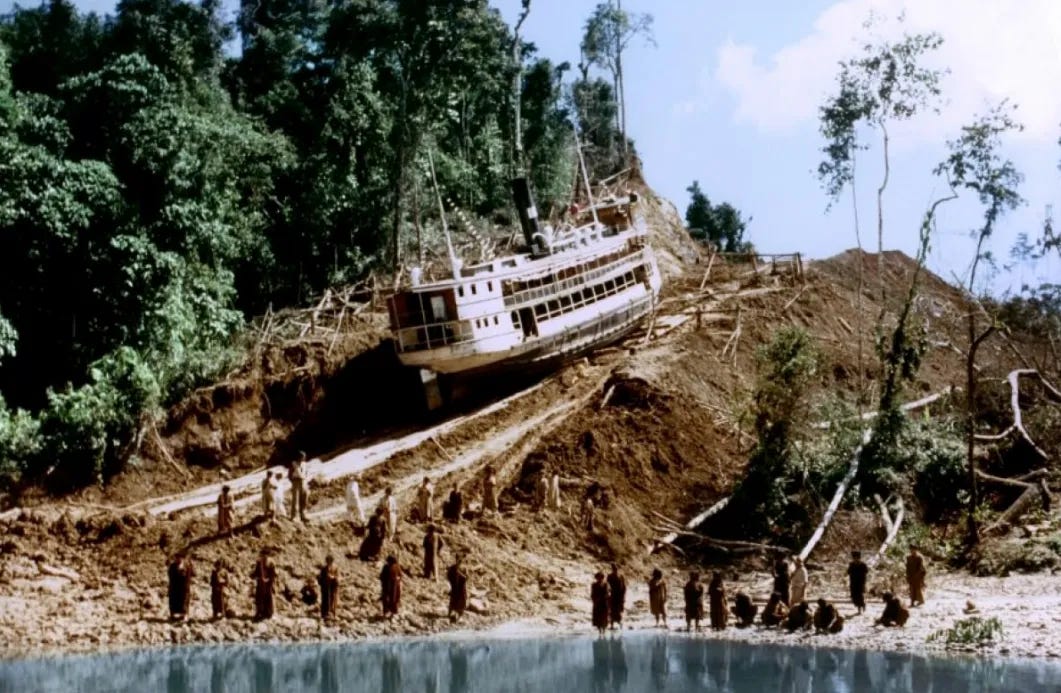
There’s a specific moment in Fitzcarraldo that I think Glen is drawing from directly.
Fitzgerald does part of what he sets out to do.
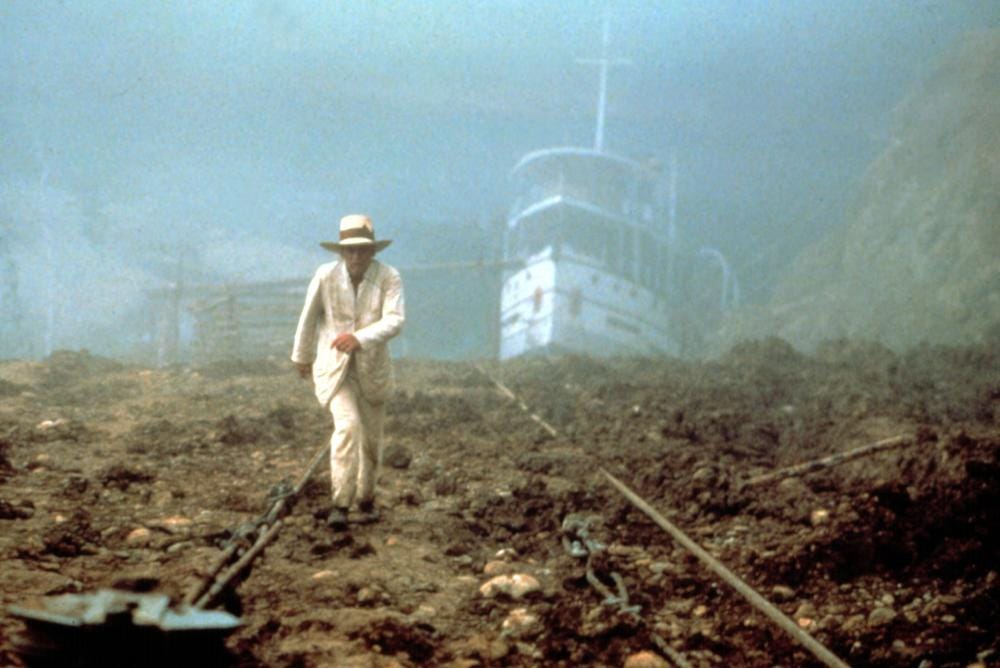
He gets the ship over the mountain.
It seemed impossible.
Everyone said it couldn’t be done.
It cost him everything. It cost the villagers too.
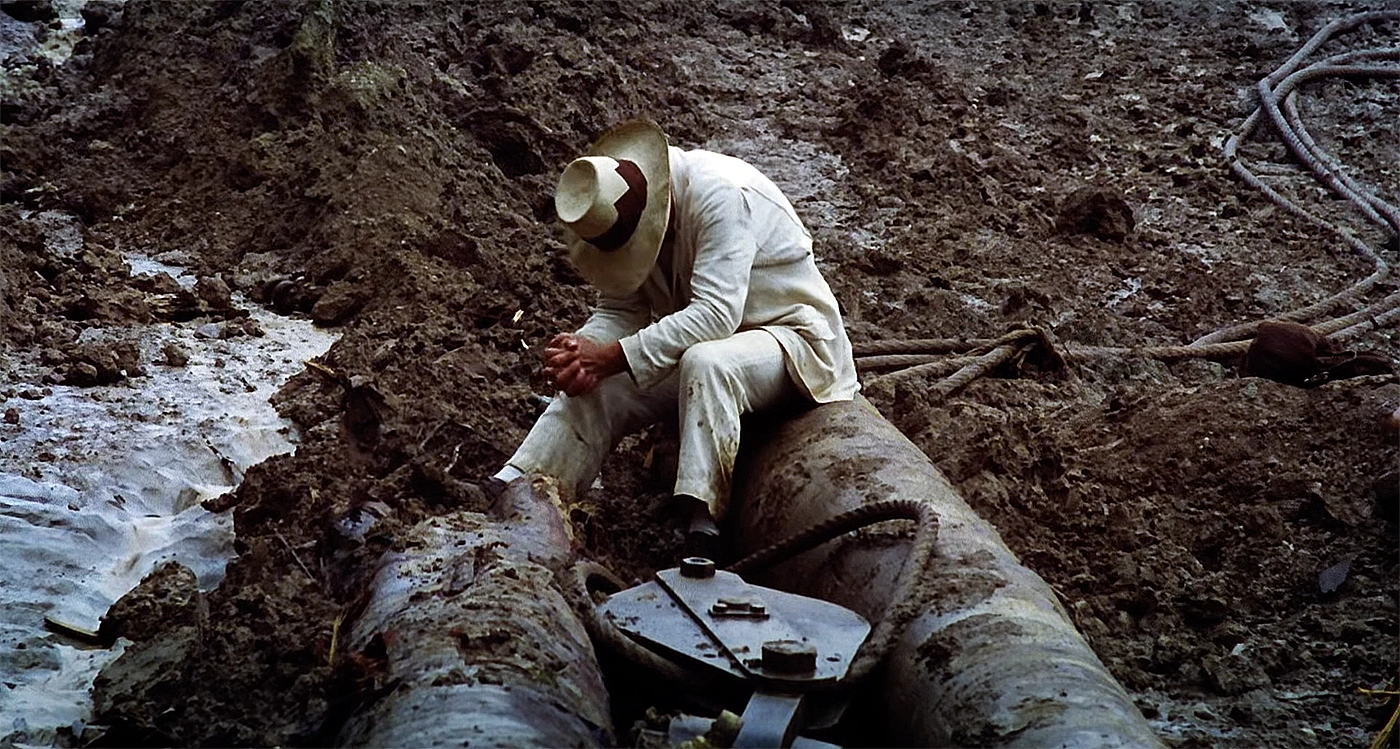
In the film, the mud is full of bodies. Men collapse under the immensity of Fitzgerald’s dream, swallowed up by his madness.
It is uncomfortable to watch the shots lingering on the bodies of the men who did not survive the journey.
Herzog forces the audience to carry the weight. He makes you look.
You can’t escape it.
The whole dream of the opera house was staked on getting that ship over that mountain.
And Fitzgerald is committed, no matter the cost.
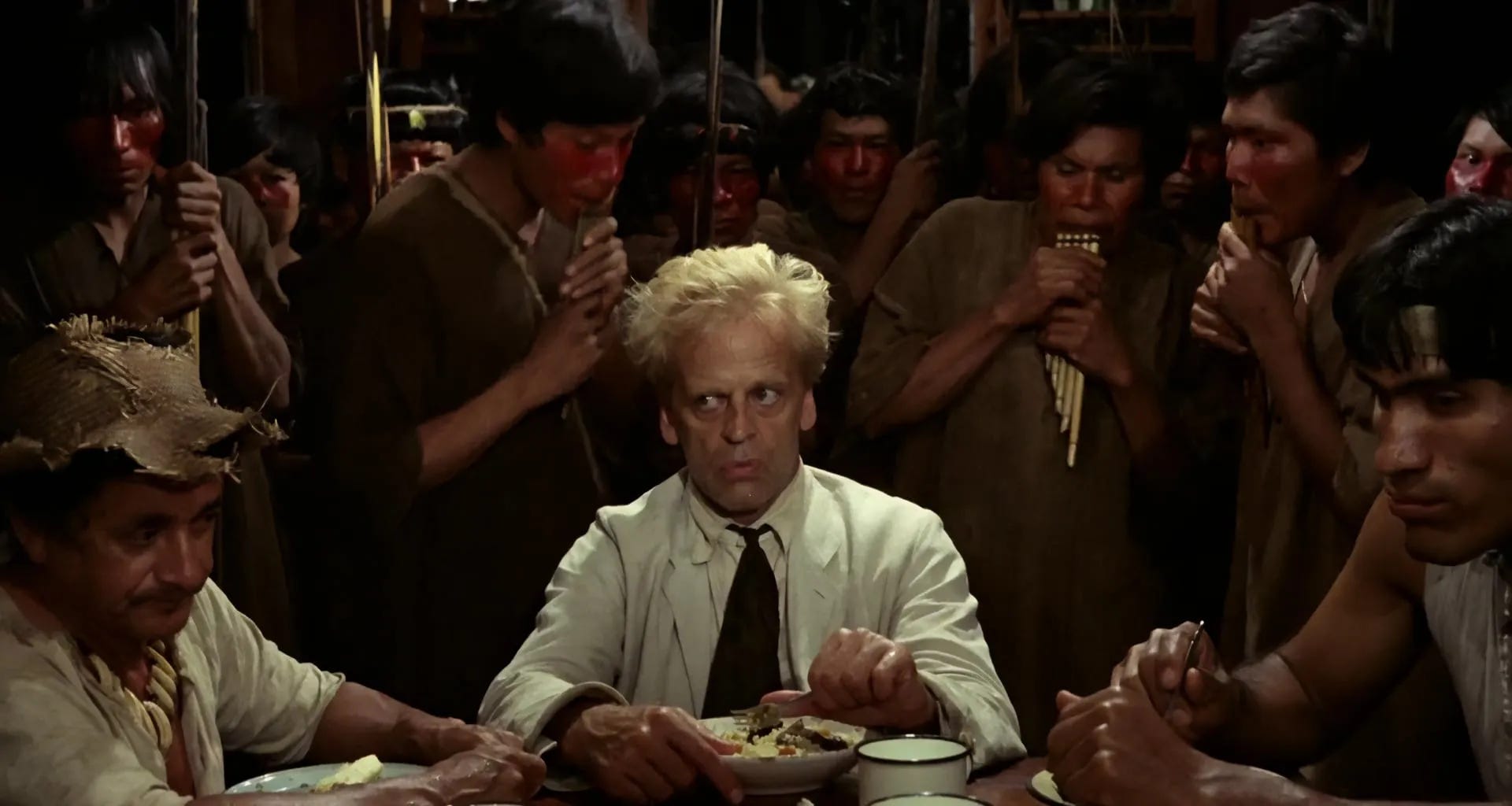
He finally gets it over… thanks to the help of the Jívaro… a people the film depicts as savages… dangerous “jungle people” Fitzgerald had been warned about.
But they do it. They succeed.
They pull a 320-ton steamship over a mountain.
Toiling in the mud.
Human bodies pulling ropes against an impossible incline.
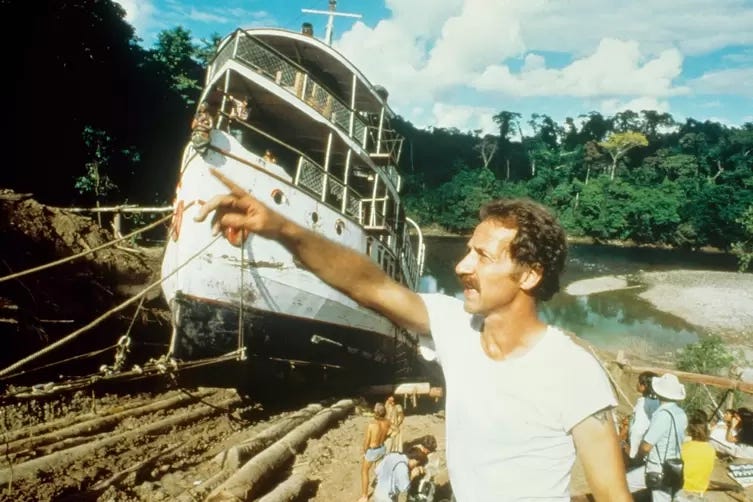
Life imitates art.
Carlos Fitzcarrald was obsessed.
Herzog became obsessed with telling his story of obsession.
Werner’s dream to capture Fitzcarrald’s dream on film nearly consumed everyone involved.
Herzog himself famously said, “If I abandon this project, I would be a man without dreams, and I don’t want to live like that. I live my life or I end my life with this project.”
Brutal.
The production of Fitzcarraldo has become legendary as one of the most dangerous and torturous shoots in cinematic history.
A long, anxious ordeal marked by conflict, illness, accidents, and serious injuries.
Two plane crashes.
An arrow attack on the production camp, followed by eight hours of emergency surgery on a kitchen table.
A logger who amputated his own foot with a chainsaw after being bitten by a venomous snake.
Two Indigenous participants drowned in an accident unrelated to the filming, and others died from dysentery during the production.
For the love of the art, Werner actually went BEYOND the source material. In the original story, they transport the ship in pieces. It was Herzog who decided “No. We will pull this boat over the mountainside.”
But love often comes with a cost.
Thankfully, no crew members died pulling the ship. But Herzog’s obsession seemed to possess him with the ghost of Fitzcarrald… a singular solitary pursuit to make the impossible come to life.
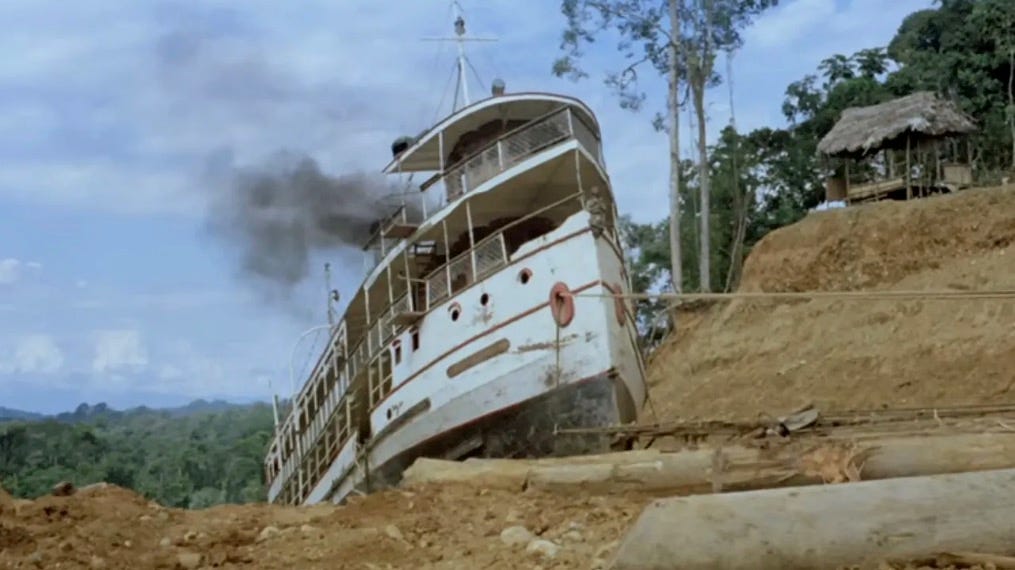
The film climaxes as the ship ascends the peak.
AGAINST ALL ODDS. Against everything anybody thought was possible. They do it.
The thing nobody believed could be done... gets done.
They throw a big, drunken, triumphant party knowing deep down in their bones they just did something genuinely historically insane.
And then Fitzgerald falls asleep.
Then, under the light of the full moon... the chief of the Jívaro people walks over to the rope tethering the ship to the shore.
This man was essentially Fitzgerald’s partner.
The guy who organized the labor. The guy who led the people up the mountain. The leader who made the impossible thing actually come to life, standing alongside this insane Irishman in the Peruvian jungle.
And what does he do?
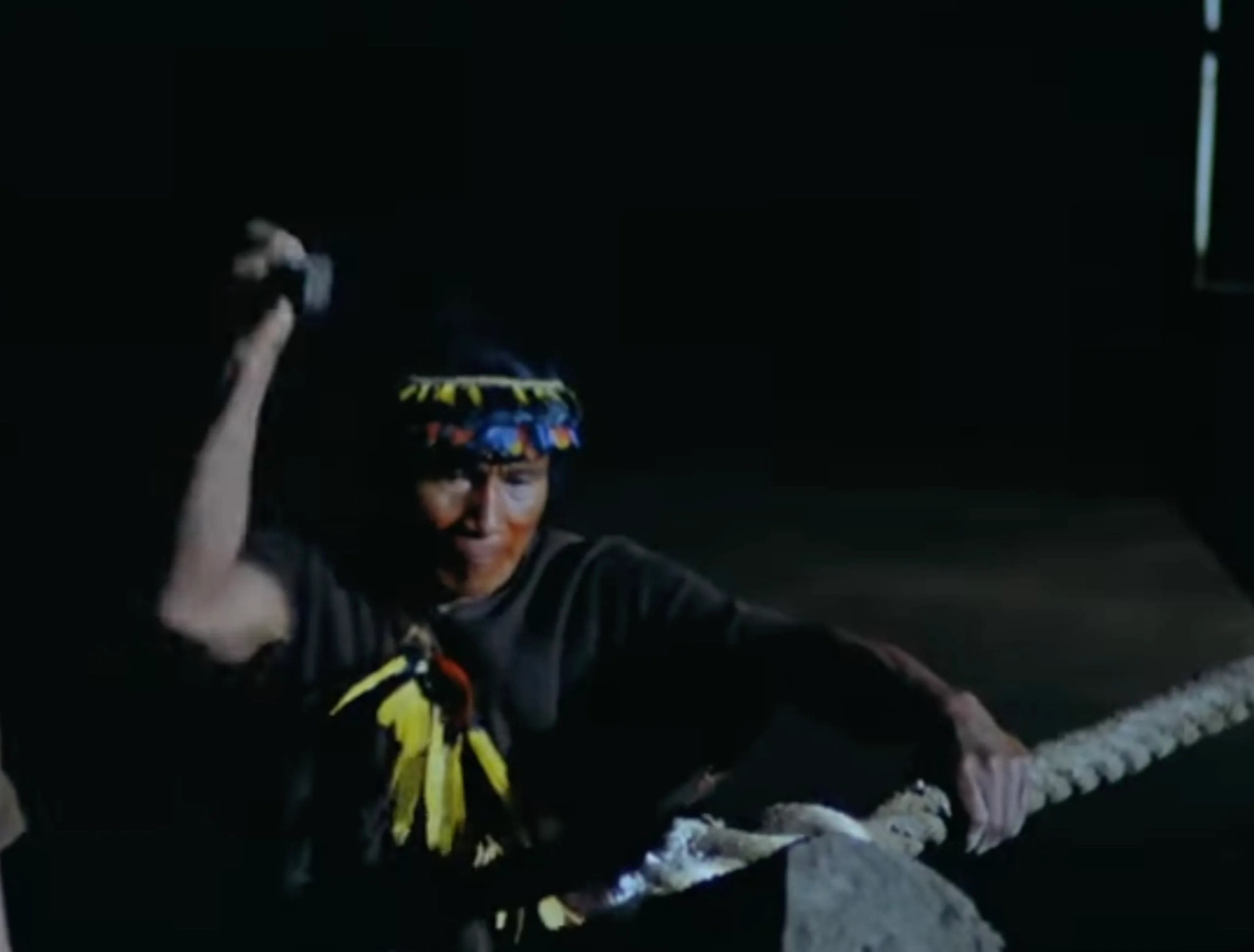
He lifts the knife… and cuts the rope.
What a moment.
All that effort. All that work.
And one single man pulls the plug.
Why?
He wasn’t angry at Fitzgerald. He wasn’t trying to sabotage him.
He just had a different belief system.
The tribe believed the ship had to continue on.
Its journey had reached its end, and now it belonged to the river.
It had to complete its journey through the rapids, and the river gods needed to be appeased… so the cut was a necessary ending.
Fitzgerald wakes up ON the boat, screaming.
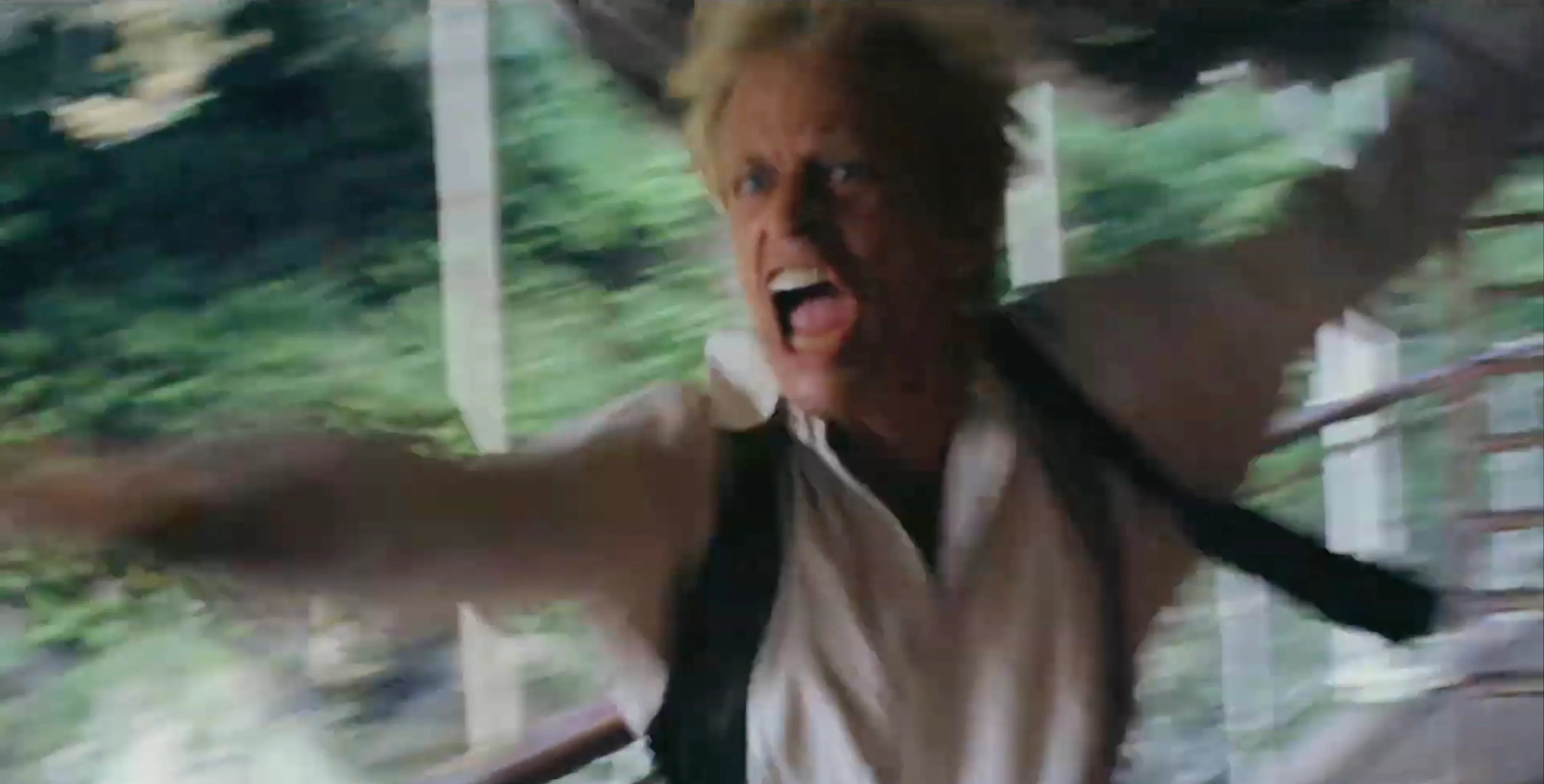
The ship is already moving, careening down the current, too far into the rapids of death to turn back.
While he was sleeping and celebrating, his partners just sold his dream right up the river.
One man’s insane, crazy, madcap dream is blown to smithereens by a simple theological disagreement.
A difference of cosmology.
Fitzgerald was loyal to his dream.
The tribe was loyal to the river.
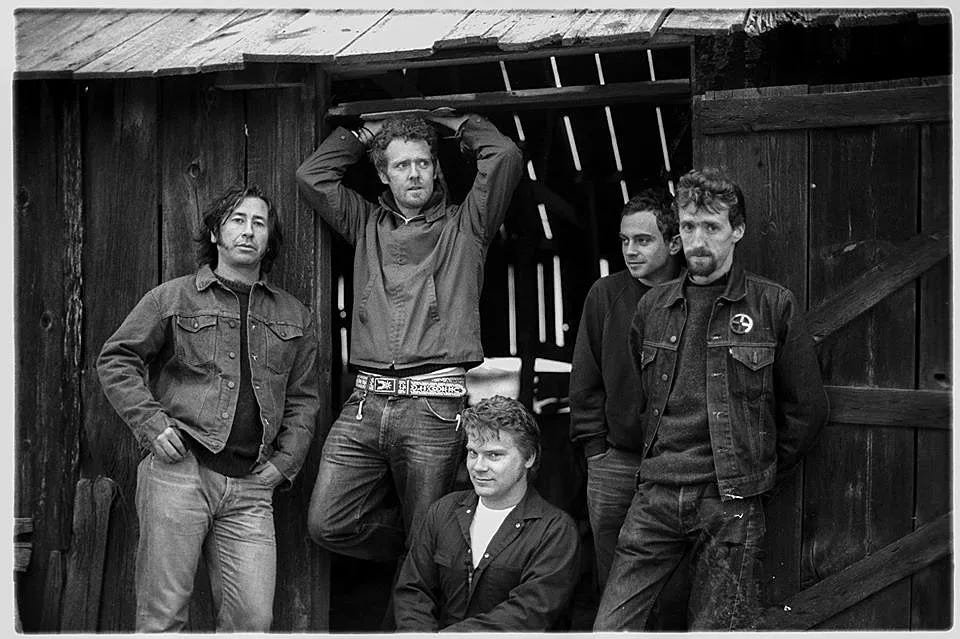
The Frames didn’t write this song from a mountaintop.
They wrote it from the middle of an absolute crater... while on fire.
Island Records had signed them.
This was a legendary label. Home of musicians like Bob Marley, Cat Stevens, & Jethro Tull.
They had seen this young kid. A dropout who started busking on the streets of Dublin at thirteen. Who joined up with a fiddle player and formed this rugged band of troubadours who believed they had something worth saying.
The Frames were supposed to be the next thing.
All the momentum was heading in one direction.
And then, suddenly, without warning...
they were dropped.
Island had decided they only needed one Irish band.
They already had the Cranberries.
Glen called it “a massive shock and a huge injury.”
So many years of busking. Dive bars. Pubs. Building something authentic and beautiful together...
and they had just reached the point where the ship crested the peak.
And now the ropes were cut.
This song comes from one of Glen’s deepest places of personal pain and suffering.
He watched the dream go downstream.
And then he picked up his guitar and wrote about it.
I think that’s the image Glen is living inside when he sings that line.
It’s not a simple psalm of lament.
My enemies have destroyed what I built.
No. It’s something more simple... and more devastating.
It’s about collaborators.
People who were genuinely with you right up until the moment they were not. People who had, by their own accounts, perfectly good reasons for what they did.
And yet those reasons had nothing to do with you and everything to do with their own river.
Their own theology.
Their own interests that were never quite the same as yours, even though you were working side by side to accomplish something great.
And so you become a sacrifice to someone else’s god.
I’m sure Glen knew something about that.
I’ve had the pleasure of knowing several friends who were musicians, and they will tell you that the industry is full of visionaries who are constantly speaking the language of hype while silently calculating what percentage of that hype they can get their hands on.
Glen probably watched that happen to himself and to others.
People who made him feel like he was the most interesting person in the world...
until he wasn’t useful to them.
Dragging the ship over the mountain. Over and over.
Watching the ropes get cut by people who think they’re just being pragmatic. Protecting their bottom line.
“It’s not personal. It’s just business, kid. We’ve had our fun, but I’m cutting the ropes. The river gets it now.”
I think a lot of us know this moment.
The horror of watching something you poured your whole life into get sold by someone who never actually understood what it was for.
You bleed for a cause, and it becomes someone else’s asset.
The dream becomes someone else’s infrastructure.
You stand by, like a ghost haunting your own life, watching others build on top of the foundation without so much as a mention of the people who laid it.
You build the ship. You drag it over the mountain.
And then, one day, you wake up screaming and someone has sold your dream down the river.
And there’s not a thing you can do.
But… this is where the song shifts.
The bitterness doesn’t win.
They sold my ship right up the river….
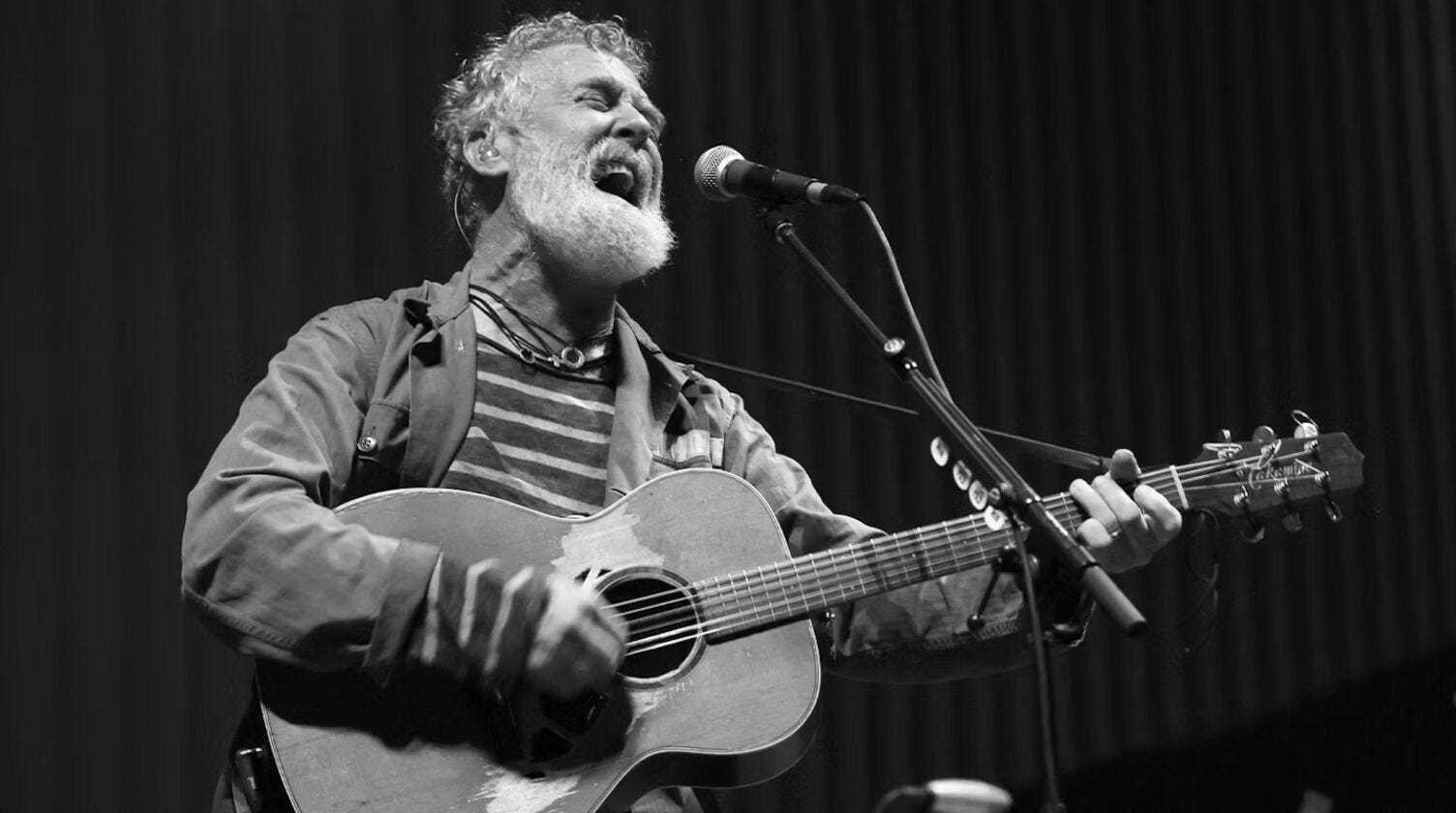
“…But I’m not going down here!!
This journey isn’t over!”
This is the most triumphant moment of the song.
And it arrives when Fitzcarraldo, when Glen, when all of us are at our lowest moment.
The ship is floating down the river.
All hope seems lost.
And yet, Glen lifts his eyes, stares at the river, and with a painful grimace, he belts out in defiance:
“I’M. NOT. GOING. DOWN. HERE.
THIS JOURNEY ISN’T OVER!!!”
It’s so freaking good.
In most performances I’ve seen, Glen and The Frames seem genuinely hopeful when they sing this.
The line before, “my ship was sold right up the river” comes with a haunting, shaky cello from Kevin Murphy that instills a sense of dread.
But when we get to “but I’m not going down here!” Colm Mac Con Iomaire’s fiddle soars with the sound of resilience.
I don’t hear anger. No bitterness.
I hear resolution.
To look disaster in the eye, laugh, and say,
“I will keep walking.”
It’s defiant. It’s blunt.
It’s like he’s giving words to every person in the audience who has felt the ropes cut out from under them…
The guy who lost his job and doesn’t know how he’s gonna feed his kids.
The girl who’s tried for nearly a decade to get pregnant.
The musician who’s been told “not yet” by every gatekeeper in a suit.
The artist who can’t live without their art, but can’t afford to do it well.
“I’m not going down. Not in this place. Not in this moment.
I will not let these people or these circumstances drag me down and drown me in the river.
This journey isn’t over!”
And then he acknowledges it:
“It’s a long way to the house of Fitzcarraldo.”
The destination is the house. The dream.
Not the mountain.
The opera house.
He is tilting at windmills. Dreaming the impossible dream.
Who on God’s green EARTH builds an opera house in a jungle?
That is magnificent and impractical and beautiful and it has no business existing… and yet Fitzgerald believes it’s worth fighting for.
No one else agrees with him.
But he fights for it because he believes it’s true.
There’s a long way still to go.
But the journey is not over.
Then Glen pivots into something I still don’t fully understand.
“And her last words were:
‘I’m always thinking of you.’
In my golden days, I was a saint.”
Her last words shift from “I was only thinking of you.” to “I’m always thinking of you.”
Interesting. The first is a defense for why an action was done.
The second is a declaration of adoration.
Glen’s self definition morphs as well in this verse.
First he said slave. Now he says saint.
Which is it?
Maybe it’s an acknowledgment that in those years where he was doing his best work, where he felt enslaved to the dream and to those who were corrupting it... he was also a saint.
Someone holy. Set apart for a purpose.
The same shift happens in live performances. He doesn’t say “I was a saint.” He says “I’ll be your saint.”
A promise. Your saint.
Which is fascinating because he wrote the song at 25… he declares in his younger years he was a slave and a saint.
Later, as a much older man… rather than reflecting on what he was in the past… Glen pledges to BECOME both slave and saint.
The dark knight becomes the paladin.
If Glen is making vows on stage… I’ll be your slave. I’ll be your saint… then who is he making them to?
And does that change who “Her” is?
It’s almost as if he’s saying to his audience, his mother, his music, and even himself… “I’m in this. I’m not going anywhere.”
Maybe the song started as autobiography and became, over thirty years of singing it on stages, something closer to a covenant.
Then he returns to the good stars.
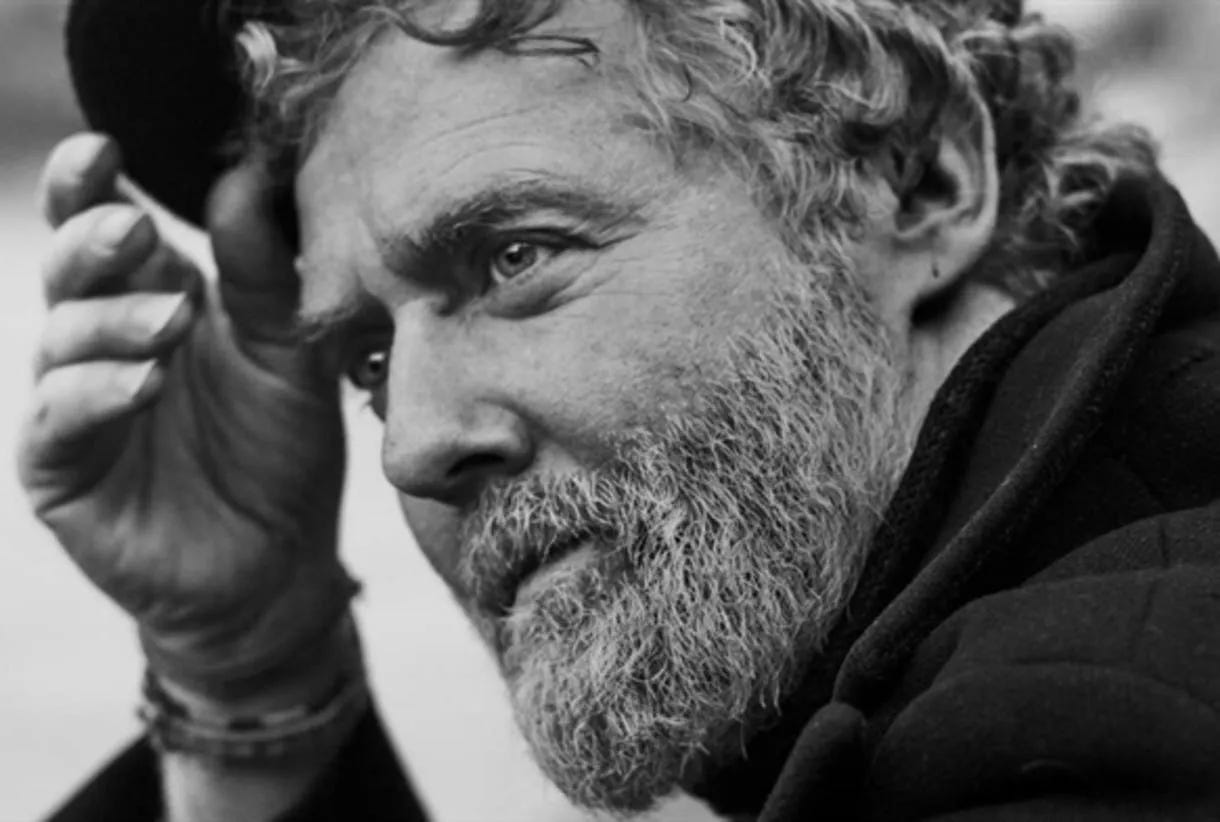
“Even the good stars can fall from grace and falter... like lapdogs that stride that mystery.”
A line I’ve never quite understood.
How does a lapdog stride a mystery!?
I’ll give it my best guess.
Here’s a thought: the lapdog is the antithesis of Fitzcarraldo.
In one small image, Glen gives us the opposite of the story’s protagonist.
Fitzgerald trembled before the mystery. He surrendered himself to it.
He knew the cost and dragged the ship up the mountain anyway because he believed that building beauty in a place it did not exist yet was worth the struggle.
What does a lapdog believe in?
Safety. Security.
Simplicity at all costs.
A lapdog trots comfortably beside its master, tongue dangling, little tail wagging, perfectly content with whatever domesticated bliss has been placed in front of it.
It cannot behold the horrific majesty of the mountain… it is too busy chasing squirrels at the summit.
I’d argue Glen was thinking about the people who cut the ropes.
A shot at every record-label executive who failed the Frames.
Every bloodless man in a suit who appointed himself gatekeeper of good music because he had a business degree, a corner office, and the spiritual imagination of a parking meter.
These people do not tremble before the mystery.
They do not behold it with awe.
They are not worshippers of it.
They are salesmen of it.
They stand beside you while the mystery looks profitable.
Then, when the numbers turn sour, they loosen the ropes, send your ship down the river, and wave from the shore with a smile… shouting,
“We had a good run! You’ll land on your feet. Good luck!”
"And her last words were
'I'll see you down in history.'
It's the only way that we can go."
Wow. This progression is insane.
The last words change through all 3 acts of the song.
Her last words:
“I was only thinking of you.”
“I’m always thinking of you.”
“I’ll see you down in history.”
I’m blown away by the tense change.
“I was only thinking of you.” Past. A final act. Said as you’re on your way out the door.
“I’m always thinking of you.” Present. Ongoing love. Even through death, it persists.
“I’ll see you down in history.” Future. A prophecy. Whoever she is, she believed in him before the world ever knew his name.
She, whoever she is, speaks in every direction time can travel.
I’d argue this is what Fitzgerald heard in his mind as the dream slipped away.
“The dream is dead, but the story will live on. People will remember this in the history books. It’s the only way we can go…”
Maybe singing that song, years later, Glen heard his mother calling out “I’ll see you down in history.”
As I listen to the song now, I am struck that Glen himself has become history. Lost to time. Existing only in our memories, and thankfully, in the songs he left us.
And then we get to the most startling line in the song.
It’s not even sung.
It’s spoken.
“I shall eclipse you.”
Wait… what does this mean?
I so wish I could ask Glen… who is being eclipsed?
The music industry?
The self-doubt?
The anxiety?
The version of yourself you feared couldn’t make it on the streets?
Or is he channeling Fitzcarraldo, shaking his fist at the impossible dream itself... saying, I will grow SO bright that I will eclipse you.
My shadow will be cast over this entire mountain!
“’Cause this is what you’ve waited for!
Your chance to even up the score!”
There’s defiance in this to the point of being almost comical. Fitzgerald shaking his fist at the mountain, screaming:
“I will defeat you. You will not destroy me.
It is I who shall become the bigger mountain!”
I don’t know what that means.
I’m not sure Glen did either.
But it’s haunting when you hear it.
As I researched, I think I came to understand what this part may mean.
Glen and The Frames channeled every ounce of their grief and defiance about what happened at Island Records into a bootstrapped album.
They named it Fitzcarraldo.
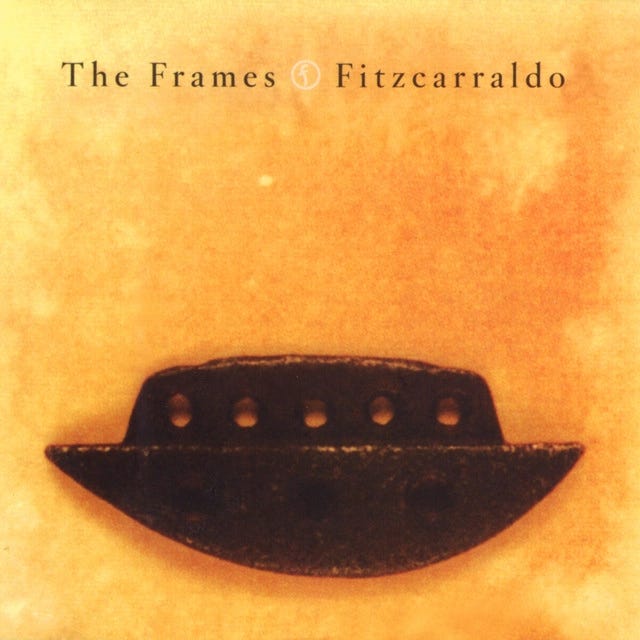
After the insane dreamer who stood on the deck of a sinking ship and declared:
“I’m not giving up.
You can’t take me down.
This isn’t the end.
I’m going to keep going.”
Glen has said it himself in interviews: Every song on that album was The Frames’ response to anyone who had dismissed them. A giant fist in the air towards the industry.
This is where Glen becomes Fitzgerald… standing on the deck of the ship while it moved downstream, shaking his fist, declaring he would stay loyal to the music even if no one else was.
He picked up his guitar.
A guitar with a hole worn clean through the body from years of playing.
A man with a hole in his heart and a hole in his guitar.
And he declared he would outlast the shrewd businessmen who tried to keep him down.
I have to be honest with you.
This is the part of the song I have the hardest time relating to.
Because my faith doesn’t lead me toward revenge. Or triumphalism. Or pride against the people who cut the ropes.
Jesus teaches us to love those who wound us.
Through His teaching, in many hard seasons, I have found much healing in praying for those who have caused me pain. Remembering their humanity. Remembering what sins Christ saved me from.
As He hung on the cross, He shouted not “I shall eclipse you!” but “Father, forgive them for they know not what they do.”
The God who knows all, yet forgives His killers because of what they don’t know.
Then, when He rises… He eclipses not men, but the darkness and death that threatened to swallow them up.
I’m going to give Glen the benefit of the doubt here. Because from all accounts from band members, friends, family, and even his exes… Glen was not the type to eclipse others.
He was humble, warm, and the kind of artist who did what he did for the love of the art… and the love of those who received it.
He was known for pulling people off the street and onto the stage. For dragging people into the mad joy of the music.
In the eclipse, I think what he’s pointing at is the inner war.
The war with the shadow self.
“I shall eclipse you.”
That can be shouted from two VERY different places.
It can come from the deck of a sinking ship...
From a man who has finally found his footing.
Or it can come from a man who has silently decided he must become the exact thing that wounded him... Just so it can NEVER hurt him again.
My mind goes immediately to stories from the pages of Scripture.
Cain killing Abel out of envy… and spending the rest of his life running from his brother’s ghost.
Saul descending into violent madness over David rising above him in the charts.
And… David, on the run, sword in hand, standing over a sleeping Saul… and refusing to slay his tormenter in revenge.
Refusing to let his wounds define the next chapter of his life.
I think that’s the difference Glen is circling through this line, whether he knew it or not at 25.
The eclipse he’s after is not some victory lap over Island Records or the industry that dropped him. It’s the daily, unglamorous refusal to let the wound possess him.
“And as these shadows fall on me now…
I will somehow.”
Not a satisfying resolution.
Just the stubborn grammar of survival.
Herzog has said he doesn’t consider Fitzcarraldo a story about a man’s success…He considers it a story about a man’s obsession. The film does not give us a verdict on whether the obsession was good or bad.
It’s ambiguous by design.
Glen seems to know his own story could go either way too.
He could become obsessed with being right... With proving Island wrong... With outshining the band that got picked over his.
Or he could stay obsessed with the music itself... The songs. Hitting the streets. Gathering the band. Friendship. Camaraderie. Collaboration.
That’s the eclipse that saves.
In any moment of great setback and great letdown, the shadow threatens to rear its head.
To consume you.
To warp you into a version of yourself that is everything you never wanted to be.
Maybe Glen is saying: I will eclipse that version of myself.
The person I was in danger of becoming the moment I saw my ship floating down the river.
Or maybe Glen would read my analysis, chuckle, and go, “Nah mate, I was just 25 and really, really mad at Island.”
God knows.
The song ends in a way that catches you off guard. You almost miss it.
After the previous line, The Frames explode into a haunting outro.
Colm’s fiddle swells. Glen’s guitar trudges up the mountain.
It sounds like a funeral dirge at a wake.
Suddenly, just when you thought he was done, Hansard shouts a guttural cry:
I don’t want to pray for you… in the name of something true!
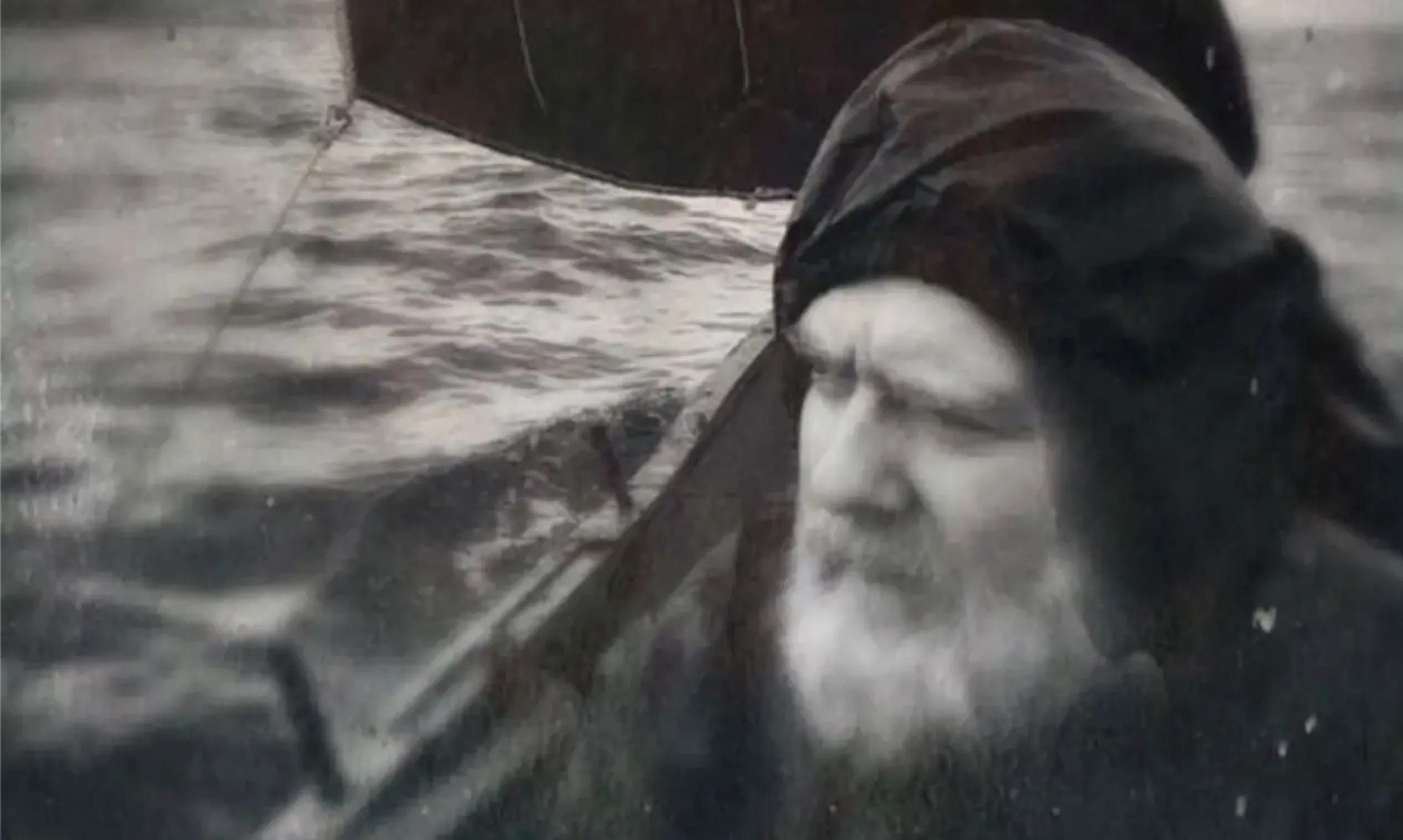
This haunts me.
He seems to be refusing to pray. Perhaps the refusal is prayer in some sort of empty religious sense. Vain repetitions.
Let me dovetail on what I just said about the shadow self.
There is a version of us in our flesh that wants to pray for vindication. That wants to pray for revenge. That wants to feed the shadow and baptize it in God’s name.
I’ve seen men do this.
But Glen says, I don’t want to do that.
I don’t want to pray for you… in the name of something true.
Perhaps he’s not abandoning prayer.
He’s insisting on authentic prayer.
Prayer given only to what is actually real.
Glen knew something about authentic prayer.
Track nine on that same Fitzcarraldo album is a song called “Red Chord.”
“And I’m pulling on the red chord
That pulls you back to me Lord…
So you’re not so far away.”
And that connects to Hansard’s whole spiritual journey, the radical rejection of religiosity in pursuit of genuine encounter with something real.
My hope is that Glen, somewhere along the road... before the road took him... found that genuine encounter.
I’ll never know in this life.
But I want to pray for him in the name of something true.
I hope you found it, Glen.
Epilogue
Glen’s funeral was held at a beautiful cathedral.
At the service itself, Glen’s brother Gary stood up to sing an original song, “I Can See God.”
Brought a tear to my eye as I sat on the couch watching this with my wife.
That song was written by Glen’s uncle Paul, who wrote the song years earlier for another friend who also died in a motorcycle accident.
Listen to Gary’s voice.
He sounds hauntingly like Glen.
Not similar. Like him.
The same timbre and Irish ache. He sings in a slightly more buttoned up cadence than his brother, but the raw tone is stunningly Hansard.
Listen to the words.
“Mama, mama, please forgive me.
I didn’t mean to break your heart.
My time has come and I must go now.
Mama... I can see God.”
This is a song about a son calling out to his mother from the edge of the next world.
Glen’s mother Catherine died before he did. She never got to stand in that crowd.
But here is Gary… Glen’s voice alive in his throat… standing on a stage, singing words written by an uncle for a fallen friend at the funeral of a fallen brother.
And all I can hear is Glen.
Glen, calling out to his mother.
Mama... I can see God.
He’s holding hands out to me across a deep bright blue sea.
I’m floating fast toward the sun.
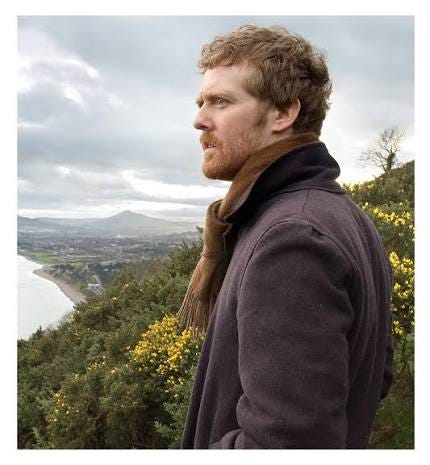
I think when a beloved artist dies, it’s far too common for Christians to wring their hands theorizing about where they stood with God.
I’m a pastor. I also think humans are messy, complicated, and when it comes to God, often walking a long road that winds through the bends.
I believe in a God who finds people. A God who seeks and saves the lost, even in silent private moments most of us will never see.
I see the beautiful mystery of faith all throughout Glen’s life. A man born into Irish Catholic religion… who wrestled through doubts about the institutional Church, who walked the Camino de Santiago four times sleeping in churches as he went.
A man who spoke fondly of Jesus, who praised the book of Luke, treasuring both the mercy of Christ towards the lowly, and the anger that turned the tables of the self-righteous.
Glen once sang:
“I’m picking up a message Lord.
And I’m closer than I’ve ever been before.
So if you have something to say… say it to me now.”
My hope is that somewhere on the path, Glen heard an answer.
The voice of the Lord saying what He had to say.
I hope Glen, a beautiful soul made in the image of the Father, can now see God clearly… the way God always saw him.
As a beloved son.
After the burial, friends and family and musicians alike gathered at legendary venue Vicar Street in Dublin to celebrate his life in the spirit of an old Irish wake.
They played song after song. Shared stories. Drank pints. Played even more songs.
Then, at the end of the night...
they decided to close with one more song.
Glen’s beloved band took the stage.
But they were joined by Glen’s family.
His brothers. His nephews. His nieces.
The people who knew him and loved him before anyone else in the world knew the name Glen Hansard.
Now... I expected them to close with Falling Slowly.
The Oscar song. The one the whole world knows. When most people think of Glen, they think of that song.
I thought they’d call up Markéta. Have Gary sing alongside her. A proper send-off.
But that’s not what they did.
I have to admit... I have tears in my eyes, even as I write this.
They didn’t close with Falling Slowly.
They closed with Fitzcarraldo.
And they didn’t sing it mournfully, like a funeral dirge.
They sang it the way Glen wrote it.
Watch the clip.
Look at this beauty.
Arms wrapped around each other. Smiling. Laughing through the tears. Belting it out like a fight song at a sports stadium.
A family that has been hit with the WORST possible thing imaginable...
and yet here they are.
Singing this song.
And as I watched, through tears of my own, I thought:
They get it.
They understand exactly what Glen wrote thirty years ago.
Because for them... the rope had been cut.
Glen didn’t die of old age.
He died from the road.
The road that took him in the wee small hours of the morning, on a lonely stretch of Dublin.
The long road that leads out to God knows.
They thought they had more time.
Not just more music. Not just more albums. Not just more songs.
More moments.
More hugs. More kisses. More conversations over coffee or tea. More chances to stand on a stage and play the songs they love together. More chances to say I love you.
And now Glen is gone.
And here’s the thing: there’s no human villain in this story.
No record executive.
No chief cutting the ropes.
It was just the road.
The road sold their dream right up the river.
And yet... the Frames and the Hansard family stood on a stage at Vicar Street.
With tears in their eyes and smiles on their faces.
And belted out:
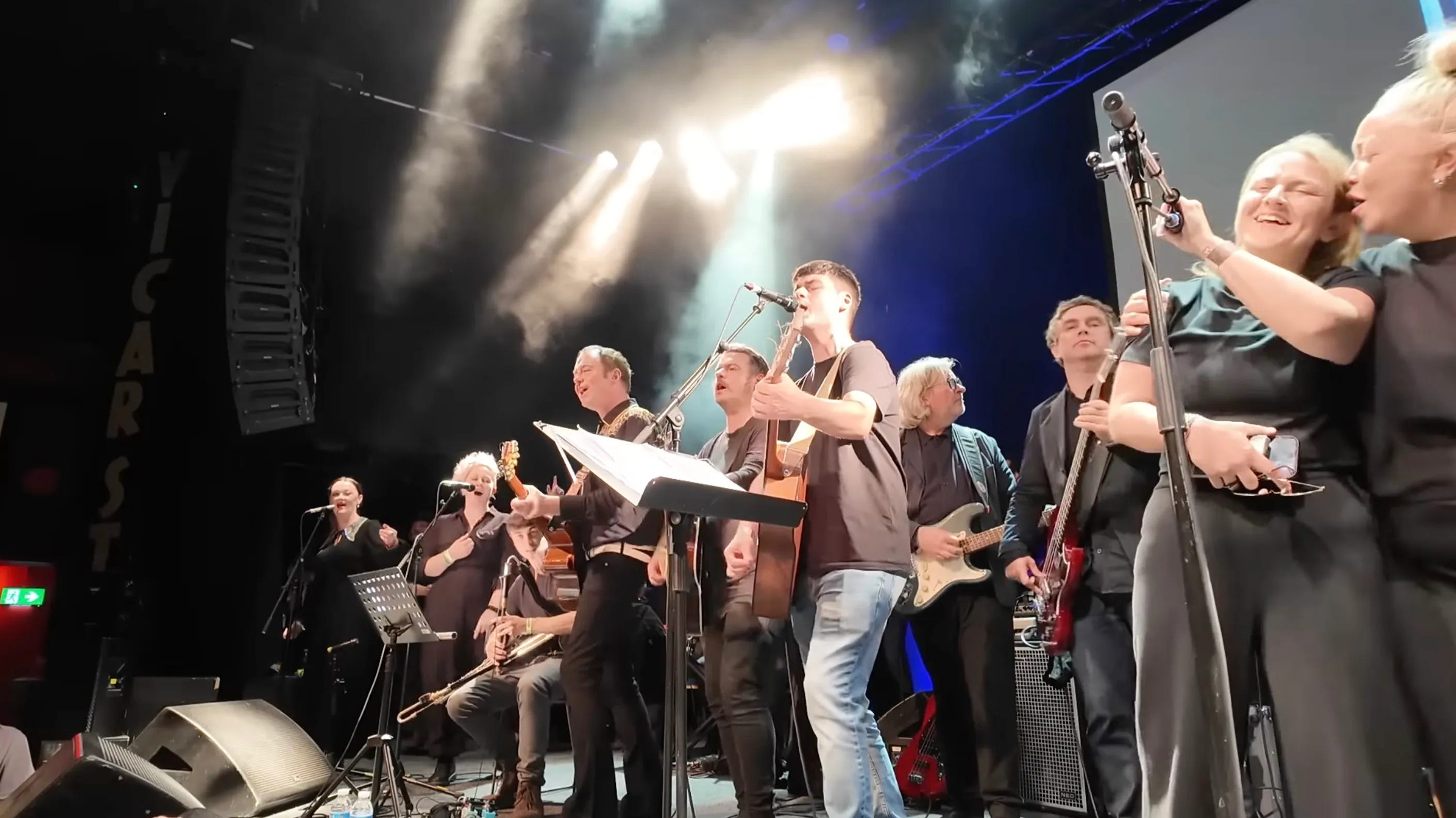
“I’m not going down here.
This journey isn’t over.”
The dream continues. The covenant is kept.
Through Colm’s fiddle and Gary’s voice... I heard Glen speaking.
To all of us who have ever lost a dream.
To all of us who love the music.
To all of us who fight to pick ourselves up after heartbreak and loss.
Through those beautiful souls on that stage, Hansard’s voice rang out.
And his last words were:
I was only thinking of you.
I’m always thinking of you.
I’ll see you down in history.
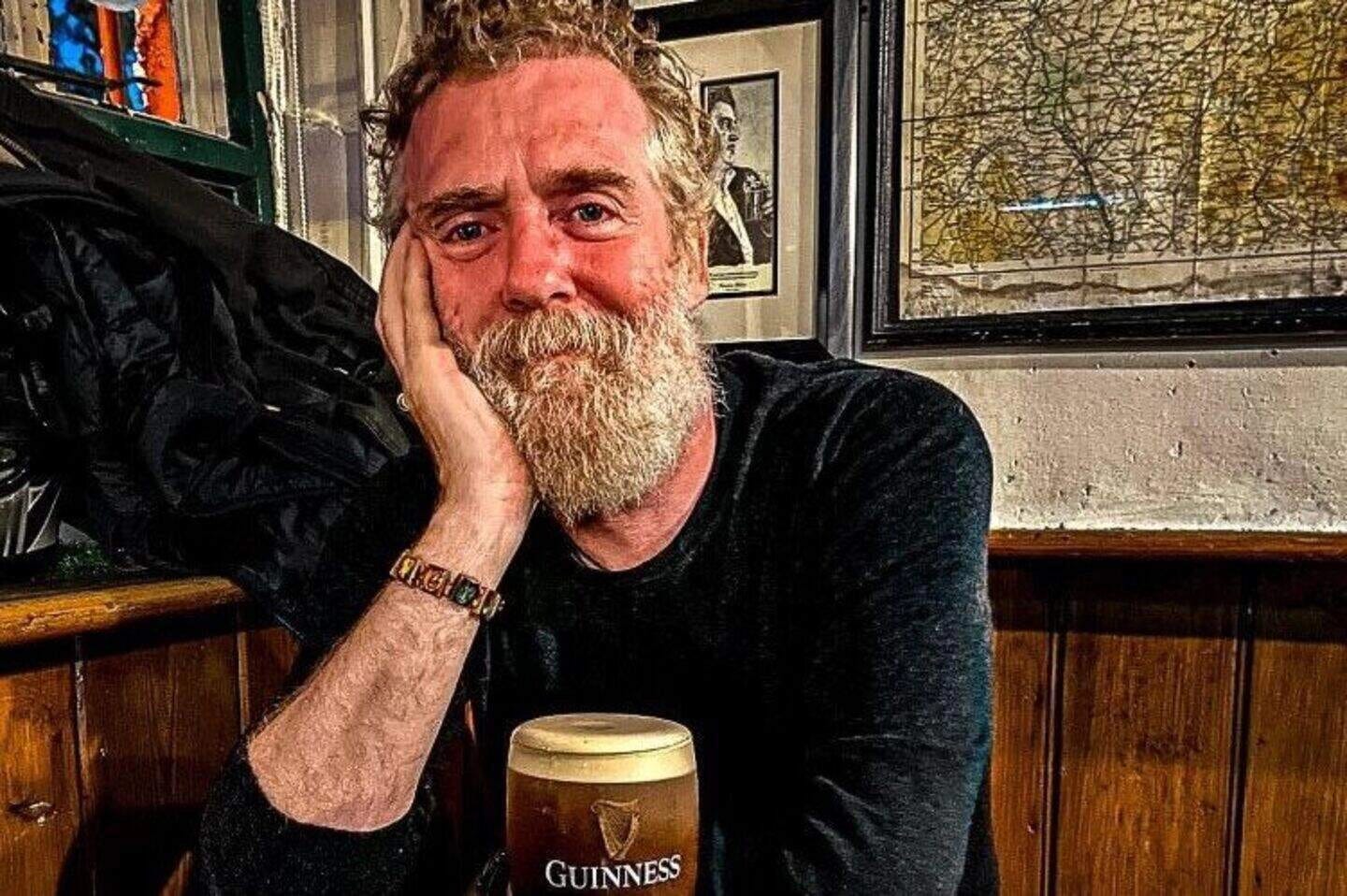
I will end by taking you back in time.
All the way back in 2003, a much younger Glen performed Fitzcarraldo live.
This beautiful, tragic song about pain and loss, heartbreak and falling, grace and hope.
And after the last note faded, he leaned into the microphone and said quietly, with nothing but gratitude:
“Beautiful. This is the best life a man could ever want.”
Goodbye, Glen.
And thank you for the music.

GoodLion Theology is made possible by readers like you. If this work has been valuable to you, you can support it here. | Or become a patron via Substack.
Note from the author: this essay was a labor of love. It was written with great respect to Glen, The Frames, and the Hansard family.
This work is a blend of research and artistic interpretation of both Hansard and Herzog. I realize there's always a chance I may have gotten some things wrong along the way.
If you’re a die hard fan of Hansard or the film, or someone who is closer to the true story, feel free to reach out with any corrections. I am happy to make adjustments in the pursuit of staying faithful to the story and legacy of Glen.
i've already listened to a few of his songs.. never heard of him before you wrote
that's a tall story, mate